Wait no more: Facelift Isuzu D-Max pricing uncovered
· Citizen
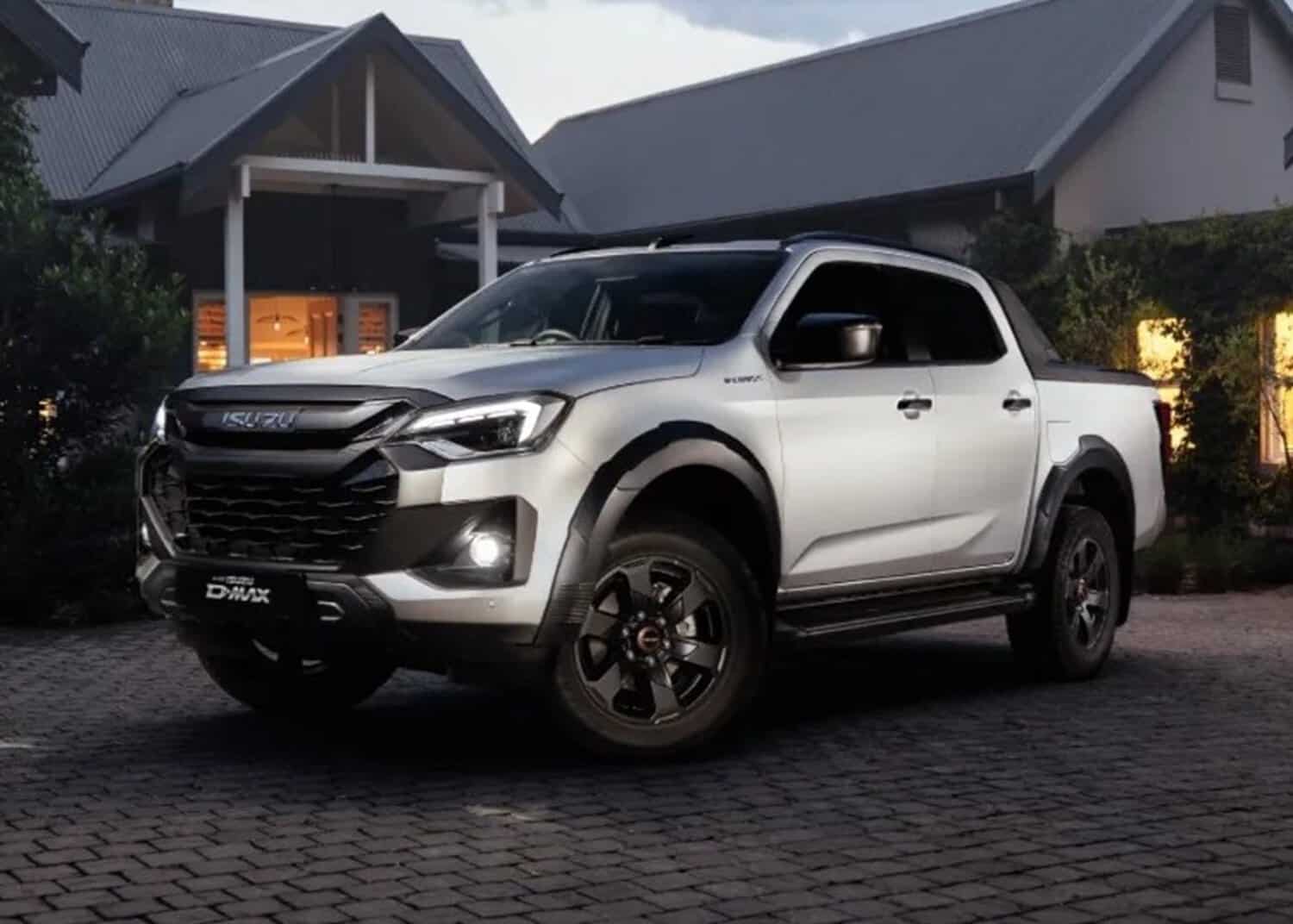
Having set an all-time sales record in March, Isuzu Motors South Africa has finally released pricing details of the long-awaited facelift D-Max range on its website.
Finally here
Selectively teased since February, the updated model will make its public showing at the Nampo Agricultural Expo in Bothaville in the Free State this week, before launching next month.
Visit grenadier.co.za for more information.
In a statement, Isuzu says the updated model has undergone 400 000km of testing over various terrain and in conditions ranging from sub-zero to scorching heat.
Why the delay?
Back in February, Isuzu executive vice-president Dominic Rimmer attributed the delay in the D-Max coming to market to content laws from the time it debuted in Thailand three years ago.
Besides an imposed freeze rule of two years between principle production and other factories being allowed to start production, a process of localisation then needs to be undertaken.
For South Africa and key exports markets, the D-Max not only undergoes conditional testing, but changes to the following from the Thai-variant:
- new body and doors;
- stronger loadbox and tailgate;
- revised rear axle;
- retuned suspension;
- uprated chassis and frame;
- improved cooling and electrical systems;
- market specific brakes;
- powertrain tuning;
- exterior tweaks;
- new heating, ventilation and air-conditioning; and
- different security system.
Exterior changes
A process that requires no less than three years before production and sales can commence, the arrival of the facelift D-Max also represents its one and only revision as an all-new generation is expected in 2027.
While Isuzu hasn’t detailed the various changes, the images on its website shows the same adaptations as those of the Thai variant.
Changes to the D-Max’s rear facia are minor compared to those at the front. Picture: IsuzuAs such, the internally named RG D-Max receives a new grille and headlights, wraparound-LED daytime running diodes, a redesigned front bumper and bonnet, and new wheel arch cladding on the flagship V-Cross.
Down the side, Isuzu has changed the alloy wheel designs, while furnishing the rear facia with a new bumper, what it calls a three-level L-shaped design motif for the new light clusters and a restyled tailgate.
New inside
Inside, the dashboard once again houses one of two infotainment systems, now measuring 8-inches on all but the flagship LSE and V-Cross derivates.
Interior has been reworked to include a new digital instrument cluster and a eight or nine-inch infotainment system. Picture: IsuzuFor the latter, the existing 9-inch still features, but as with the 8-inch, tweaked by swapping the physical shortcut buttons at the screen’s base for touch-sensitive switches.
New are a pair of volume dials previously absent, type-C instead of type-A USB ports and an improved forward facing camera that works in conjunction with the Autonomous Emergency Braking system.
Same bodystyles
As before, the D-Max is offered in single, Extended and double bodystyles, with the former having two trim grades, base and L – the previous LS having been dropped.
The single cab D-Max range spans seven variants. Picture: IsuzuUnchanged on the Extended Cab are the LS, LS and LSE grades, while the double cab adds the X-Rider between the LS and LSE. As before, the V-Cross is again limited to the double cab.
Besides the 212mm ground clearance of the unbadged single cabs, all other D-models have 227mm of clearance and a wading depth of 800mm.
The D-Max Extended Cab line-up comprises eight models. Picture: IsuzuPayloads vary and amount to the following:
- single cab: 1 160kg – 1 305kg
- extended cab: 1 005kg – 1 170kg
- double cab: 1 040kg – 1 140kg
No 2.2
Up front, and unsurprisingly, Isuzu has not availed the new 2.2 litre RZ4F Max Force with 120kW/400Nm for the local market.
“We are looking at the 2.2, but we first need to test it locally. It will come, but we need to make it ready for South Africa,” Rimmer said when asked about its availability.
As such, the local line-up continues with the RZ4E-TC 1.9 litre and 4JJ3-TCX 3.0 litre DDI units.
The 2.2 litres’ absence also extends to the eight-speed automatic gearbox. As such, buyers are again offered a six-speed manual or a six-speed automatic on the 1.9 and the self-shifter on the 3.0 litre only.
Claimed towing capacity, regardless of the transmission or optional four-wheel drive system on the 1.9, is 2 100kg and 3 500kg on the 3.0 litre.
Spec
Based on Isuzu’s website, the unbadged low and high-ride single cab-only model has the following as standard:
- 16-inch steel wheels;
- two-speaker sound system;
- 4.2-inch instrument cluster display;
- air-conditioning;
- canvas seat trim;
- eight-inch display;
- Apple CarPlay and Android Auto;
- ABS and EBD;
- dual front airbags;
- traction control;
- Hill Descent Control;
- Electronic Stability Control;
- Trailer Sway Control;
- Hill Start Assist; and
- Brake Override Assist.
Upping the ante, the L gets 17-inch steel wheels, a multi-function steering wheel, rain sense wipers, cloth seats, electric mirrors, electric windows and a rear bumper.
A four-speaker sound system is standard on all double and Extended Cabs, and limited to the 3.0 litre single cab. Also standard on the former pair are side-steps, keyless entry and remote central locking.
Stepping up to the LS brings:
- 17-inch alloy wheels;
- body-coloured bumper, tailgate handle and door handles;
- auto on/off LED headlights;
- fog lamps;
- folding electric mirrors;
- LED daytime running lights;
- split glovebox;
- rear electric windows (double cab);
- six-speaker sound system;
- leather-wrapped steering wheel;
- seven airbags;
- cruise control;
- reverse camera;
- rear parking sensors; and
- rear diff-lock.
Unique to the X-Rider, which also sees the return of the 3.0 litre engine, are 18-inch black alloy wheels, black sports bar, grey roof, gloss black mirror caps and side-steps, the red Isuzu logo on the grille, Isuzu-branded wheel caps and X-Rider badges.
The X-Rider is again offered with the 3.0 litre engine as an alternative to the 1.9. Picture: IsuzuInside, the X-Rider gets red stitch work, X embroidery work on the front seat headrests, a fading black to red X decorative insert on the passenger’s side, X-Rider floor mats and a seven-inch digital instrument cluster.
Beside the new nine-inch display and seven-inch instrument cluster carried over from the X-Rider, opting for the LSE adds:
D-Max double cab range: (L-R) V-Cross, LSE and LS. Picture: Isuzu- chrome effect grille;
- 18-inch alloy wheels;
- auto lock/unlock doors;
- chrome sports bar;
- partial leather upholstery;
- electric driver’s seat;
- dual-zone climate control;
- gear shift paddles;
- push-button start;
- heated front seats;
- front parking sensors;
- Blind Spot Monitoring;
- Rear Cross Traffic Alert; and
- Remote Engine Start.
Completing the range, the V-Cross gets:
- tow bar;
- wheel arch cladding;
- eight-speaker sound system;
- power lumbar support for the driver’s seat;
- Auto High Beam Assist;
- Automatic Emergency Braking;
- Forward Collision Warning;
- Reverse Automatic Braking;
- Lane Departure Warning;
- Driver Attention Alert;
- Lane Keep Assist; and
- Traffic Sign Recognition.
Colours
On the colour front, all models can be had in the following hues:
- Splash White;
- Mercury Silver;
- Onyx Black;
- Biarritz Blue;
- Red Spinel.
Reserved for LS models and above is Islay Grey, however, Sunset Beige is only offered on L and LS variants, as well as the unbadged single cab.
Price
Included with all D-Maxes price tag is a five-year/120 000km warranty and a five-year/90 000km service plan.
Single Cab- D-Max 1.9 Low-Ride – R433 860
- D-Max 1.9 High-Ride – R463 860
- D-Max 1.9 HR L – R483 650
- D-Max 1.9 HR L 4×4 – R585 200
- D-Max 1.9 HR L AT – R502 230
- D-Max 1.9 HR L 4×4 AT – R603 600
- D-Max 3.0 HR L 4×4 AT – R689 090
- D-Max 1.9 L – R533 690
- D-Max 1.9 L 4×4 – R583 690
- D-Max 1.9 L AT – R553 690
- D-Max 1.9 LS – R561 190
- D-Max 1.9 LS AT – R584 340
- D-Max 1.9 LS 4×4 AT – R634 340
- D-Max 3.0 LSE AT – R700 760
- D-Max 3.0 LSE 4×4 AT – R785 720
- D-Max 1.9 L – R574 010
- D-Max 1.9 L 4×4 – R670 800
- D-Max 1.9 L AT – R593 880
- D-Max 1.9 LS – R611 730
- D-Max 1.9 LS AT – R633 290
- D-Max 1.9 LS 4×4 AT – R717 700
- D-Max 1.9 X-Rider – R669 900
- D-Max 1.9 X-Rider AT – R690 810
- D-Max 1.9 X-Rider 4×4 AT – R776 890
- D-Max 3.0 X-Rider AT – R792 470
- D-Max 3.0 X-Rider 4×4 AT – R844 470
- D-Max 3.0 LSE AT – R850 880
- D-Max 3.0 LSE 4×4 AT – R900 310
- D-Max 3.0 V-Cross AT – R898 380
- D-Max 3.0 V-Cross 4×4 AT – R948 930