Why You Trust Your Nurse More Than Your Doctor
· Time
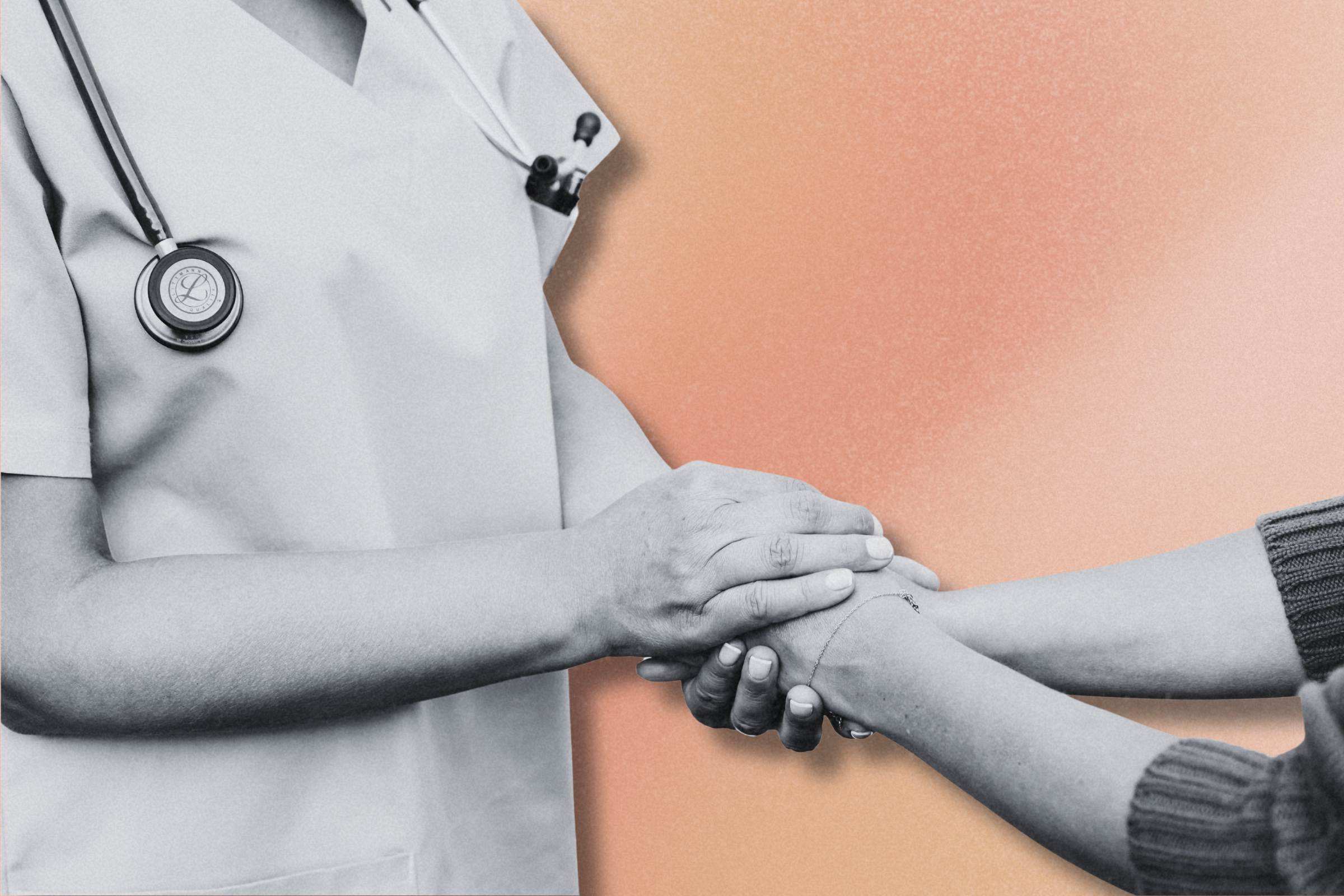
Anyone who’s spent time in a hospital knows that the heart of a patient’s care team is the nurse. That’s who shows up at any hour to adjust an IV, answer panicked questions, or simply sit at the bedside while a patient tries to make sense of what’s happening to their body. That proximity—physical, emotional, and constant—turns into something powerful: trust.
“The doctor is treating the disease,” says Marlo Robinson, dean and vice president of Purdue Global School of Nursing, who has more than three decades of experience as a nursing and health care leader. “We’re the ones who are with the patients living with the disease.”
Visit h-doctor.club for more information.
That dynamic helps explain why nurses have consistently ranked as America’s most trusted profession in Gallup’s annual honesty and ethics poll—25 times since 1999, with the lone exception of 2001, when firefighters briefly took the top spot after the September 11 attacks. In the most recent poll, 75% of Americans rated nurses’ honesty and ethical standards as “very high” or “high.” Doctors came in at 57%, a roughly 20-point drop from their pandemic-era peak and among the lowest the profession has scored in nearly three decades.
The trust gap isn’t new, but it’s widening. Experts say the reasons for it have to do with how American medicine is structured, taught, and paid for, and because the people patients see most aren't always the ones making the decisions.
Nurses are visible in a way doctors aren’t
Part of the trust gap comes down to a basic fact patients often don’t think about until they’re in a hospital bed: Doctors and nurses do different jobs—and the scope of those jobs is more separated than most people realize. “Their scope of practice is to diagnose, treat, and prescribe, and we’re forbidden from doing those things,” says Theresa Brown, an oncology nurse and author of books including Healing: When a Nurse Becomes a Patient. (By "treat," she means the authority to decide on a course of treatment—nurses are the ones who carry it out, not the ones who order it.) Nurses are trained for something else: to assess patients in real time, administer the treatments that doctors order, watch for complications, and advocate for the person in the bed. What that means in practice is a different relationship with patients. “I’m not here to talk to you about your oncogene test result,” Brown says. “But I can certainly talk in generalities with you about what chemotherapy’s like, and I can look up your drug for you and tell you what its side effects may be.”
Given these differing responsibilities, nurses simply spend more time with patients than doctors do. Doctors work in episodes, Robinson says: They pop in for morning rounds, an afternoon procedure, or a 7-minute consultation. Nurses, on the other hand, often work in 12-hour shifts that allow them to notice changes big or small. “We’re with patients moment to moment,” she says.
Jennifer Mensik Kennedy, president of the American Nurses Association, frames it the same way. “We are physically and emotionally closer to patients than almost anyone in the system,” Kennedy says. “We’re there at 2 a.m. We’re there during their fear and their pain and their uncertainty, not just the decision points.”
Doctors aren’t actually spending less time on their patients than nurses, says Dr. Danielle Ofri, a primary care internist at Bellevue Hospital in New York. They’re spending it differently—often invisibly. They’re adding documentation to the patient’s chart, calling consultants, tracking down a CT result, and arguing with insurance. And, increasingly, they’re checking the patient portal during off-hours, because patients now see their results the moment they post and Ofri doesn’t want anyone sitting alone with a scary result. “When my patient finishes the visit and leaves the room, I'm not done with them,” Ofri says. “I don't know if patients recognize how much work their doctors are putting in behind the scenes.”
Read More: Why You're Seeing a PA or NP—But Not a Doctor
Still, nurses’ visible presence isn’t just reassuring; it’s measurable. A growing body of research has linked nurse staffing levels to patient outcomes, with study after study finding that hospitals where nurses care for too many patients at once see higher rates of complications and death. “When you don’t have enough nurses, people die,” Brown says. “That’s not me being dramatic. That’s what the research shows.”
She attributes this, in part, to a skill she says nurses develop on the job. “There’s this nursing expression I love, which is ‘to have eyes on,’” Brown says. “Like, ‘I want to put eyes on you.’ We’re the observers. We’re looking, and we’re watching. And after a while on the job, you just develop these instincts—something is wrong here.”
That tracks with what Robinson sees. "We're the early warning system,” she says. “We're noticing these sometimes imperceptible shifts—a slight change in skin tone, fatigue, oxygen levels dropping, a shift in the way they're breathing, a look of quiet panic. We move oftentimes faster than our monitors and machines because we see it and we know what it means."
Teri Frykenberg, an ICU nurse for nearly four decades who now works as a patient advocate, has seen those instincts save lives. She remembers being called in by the family of an 83-year-old man who had been in a Massachusetts emergency room for 10 days. He hadn’t slept and was hallucinating. The doctors had transfused him with five units of blood for a bleed they couldn’t explain and were giving him antipsychotics. That’s when Frykenberg asked whether anyone had tested him for Clostridioides difficile. The resident told her they didn’t think it was that. “I’ve been an ICU nurse for 39 years,” she told him. “I think I know what it looks like.” The test ended up coming back positive, and a subsequent colonoscopy found that the C. diff had eaten a hole through the man’s colon wall. The diagnosis finally led him to the right treatment.
Patients tell nurses things they won’t tell doctors
The trust gap isn’t only about who’s in the room. It’s also about what patients are willing to say to who’s there.
Brown can predict the rhythm of an inpatient morning before it happens. In one familiar scenario, a patient tells the night nurse she was up for hours with pain so bad she couldn’t sleep. The rounding team arrives a few hours later. How are you doing today? the doctor asks. I’m fine, the patient says. The nurse waits in the corner. Once the team leaves, she steps closer. But you’re really having a lot of pain, right? The patient nods. Well, yeah, I am having some pain.
“It’s almost like this idea of, you don’t want to be whining to the doctor,” Brown says. “It’s sort of like, ‘Don’t bother daddy in his study.’”
Kennedy says patients save certain kinds of questions for nurses—the small ones, the embarrassing ones, the ones that don’t seem important enough to take up a doctor’s time. “Patients ask doctors the big questions,” she says. “They ask nurses the small ones. And the small ones often turn out to be the ones that matter.”
Patients often pick up on who feels easiest to talk to. They watch nurses’ faces while doctors talk, and then wait until the doctor leaves the room to ask what the doctor actually meant. “Patients see nurses as more approachable,” Frykenberg says. “We’re the ones who translate.”
Even doctors say they feel the gap from the other side. “We’re at a distance a little bit,” Ofri says. “Nurses just feel closer to patients. I see that.”
Brown thinks the dynamic is partly about jargon, partly about white coats, and partly about an unspoken medical hierarchy patients have absorbed long before they get sick. The result, she says, is that doctors get an edited version of what’s happening with the patient in front of them. Nurses get the unedited one—and they spend a lot of their time relaying it back to doctors. Sometimes that means flagging a symptom the patient downplayed, or asking the doctor a question the patient was too intimidated to voice.
“I think nurses are seen as truth tellers,” Brown says. “People have these stories about nurses cutting through the crap.”
It’s training, not just personality
Some patients just assume that nurses are simply nicer people than doctors—that nursing attracts the kind of person who wants to sit at a bedside, while medicine attracts the kind who wants to solve a problem and move on. Yet nurses push back on that idea. Rather than having certain personality traits, their training emphasizes a particular set of skills.
“People often don’t know how much science training we have,” Brown says. “You have to take chemistry, anatomy, physiology, genetics, pharmacology. It’s not just about being a nice person. There is a knowledge base to the field.” That scientific grounding is only part of what nursing education requires. “Empathy and active listening and patient advocacy—it’s braided into the curriculum,” Brown says. Nursing students are taught how to deliver hard news, sit with a patient who’s frightened, and translate clinical information into language that makes sense for those without a medical degree.
Read More: Why You Should Seek Out a Few Minutes of Awe Every Day
The training also comes with a formal ethical framework. The American Nurses Association maintains a code of ethics that establishes a nurse’s professional loyalties. The patient comes first; fellow nurses come second. The employer comes third. “Physicians have a bioethics framework,” Kennedy says. “We have a code of ethics, which is not a bioethics framework. It’s a professional ethics framework.” That’s what gives nurses the standing—and obligation—to push back when an institution’s interests start to drift from the patient’s. “In education, nurses are indoctrinated: Patient is always first, period,” she says.
Medical school, on the other hand, is structured differently. Communication is part of the curriculum, but it isn’t the spine of it. “It’s the add-on, not the primary thing,” Ofri says. The volume of clinical material doctors are expected to learn is enormous, and the time available to teach students how to talk to patients has shrunk accordingly.
Nurses don’t carry the system’s baggage—and patients can feel it
There’s another reason patients tend to trust nurses more than doctors, and it has to do with money.
Brown has noticed that her patients increasingly wonder, sometimes out loud, whether the doctor recommending a treatment or procedure has a financial stake in the recommendation. “As money has become more and more integral to our health care system, people's trust in their physicians has taken a big hit,” she says. “They know they need to see a doctor, and yet at the same time they think, ‘Well, is this person just trying to make money off me?’” She doesn’t think most patients believe their doctor is acting in bad faith—but then may carry an unconscious sense that medicine has become a commodity.
Ofri says patients routinely ask her if she makes money if they opt for certain tests. “I’m so glad I can say no,” she says. As a salaried primary care physician, she doesn’t bill per procedure—and she’s noticed that being able to say so changes the conversation.
Read More: Amy Schumer Opens Up About Her Endometriosis: 'An Invisible War'
There’s a structural version of the same point. As Kennedy says, hospitals classify nurses as expenses, not revenue generators. “But no one goes to the hospital just to be there,” she says. “They go because they need nursing care.”
The flip side of all of this is advocacy. Because nurses aren’t paid by the procedure and because their professional code formally orders the patient ahead of the employer, they’re often the ones who push back when an institution’s interests and a patient’s interests diverge, Kennedy says. “We protect the patient from the interests of the system.”
Robinson frames this as something patients sense before they can name it. Hospital care, she points out, often catches people at their most exposed. "Take off all your clothes, put on the gown," she says. "We're managing bodily fluids, holding hands, witnessing private tears and fears. Patients trust us because they know ethically and professionally we're bound to protect them—whether they've read [the code of ethics] or they just feel it."
She thinks the deepest version of the trust patients place in nurses shows up at the end of medicine’s reach—in the moments when curative treatment has run out and there’s nothing left for a doctor to do. When that happens, she says, a doctor’s role sometimes narrows, while the nurse’s doesn’t. Nurses help manage a dying patient’s pain, sit with their family, and stay in the room when a cure is no longer an option.
“The most profound trust occurs when medicine can’t do anything else,” Robinson says.