How to Say ‘Stop Invading Greenland’ With Reindeer Sausage
· The Atlantic
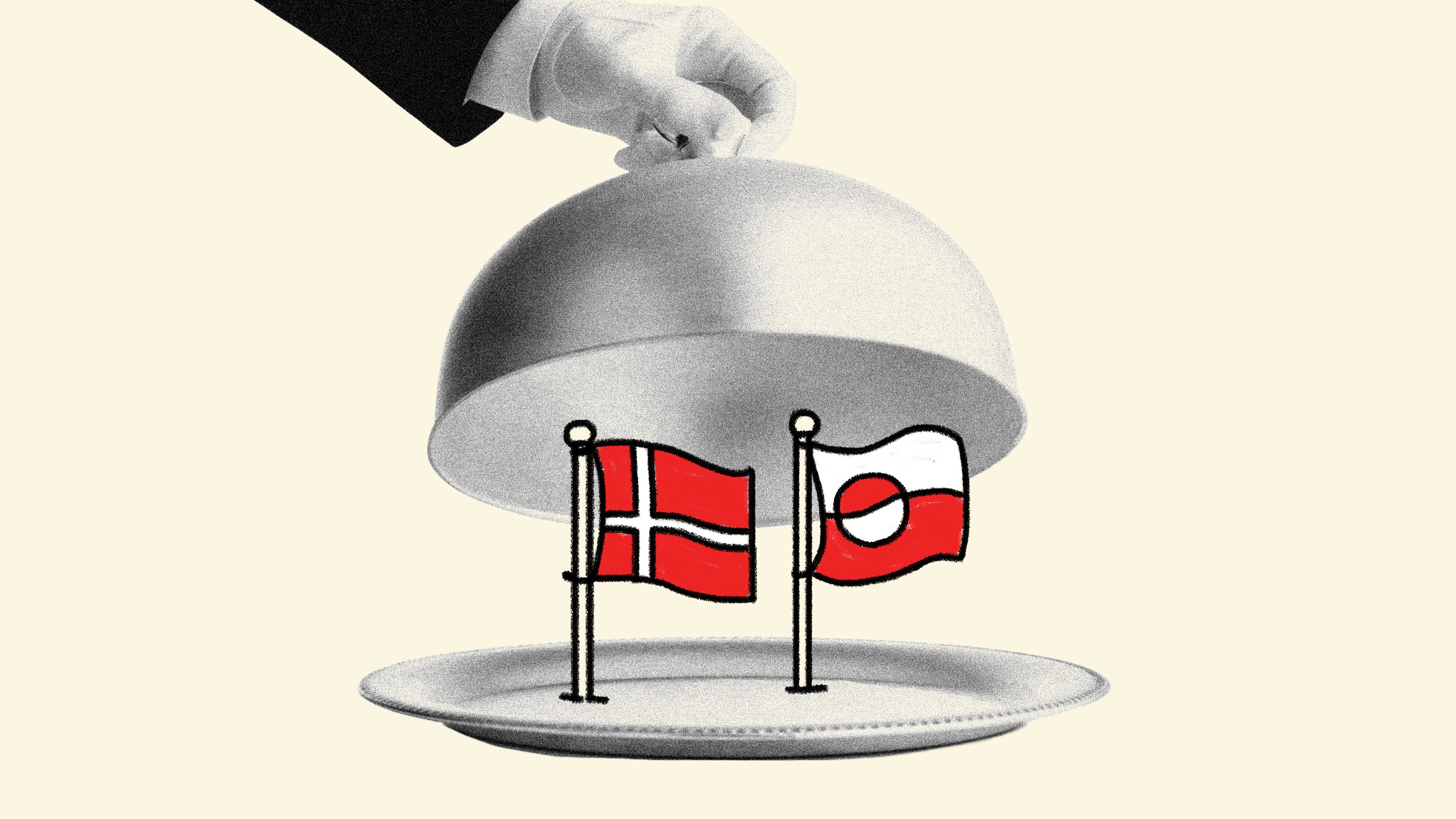
Food is like dance: a language, but not one you’d want to use in an emergency. Food can say I love you or Congratulations (it helps if you are able to use icing on top of the food to make its message clearer) or even something slightly more subtle: I am proud of the seafood offerings of my region. It cannot say Look out! There is a projectile flying at your head! or Please stop trying to invade Greenland. Or can it?
Visit afnews.co.za for more information.
I went to “Taste of the Arctic” last week at the Danish ambassador’s residence to find out. The evening, billed as a celebration of “the culinary heritage and enduring cultural ties connecting Alaska, Greenland, and Denmark across the Arctic and North Atlantic,” came the week before the signing of an agreement about the U.S.’s presence in Greenland, though I am not sure I would have been able to tell you any details of the agreement being hashed out based on the available cuisine.
The food was made by two chefs, Miki Siegsted and Joaquin Guzmán, representing Greenland and Denmark respectively. Guzmán, from Argentina, is the head chef of a Danish restaurant that cooks exclusively with Danish ingredients, meaning that if he wants chocolate, he cannot have chocolate. He has to engineer something like chocolate himself by using the by-products of beer brewing, which he reports have a delicious, chocolate-like flavor. Siegsted makes a point of introducing Greenlandic cuisine to a wider world, and is serving us reindeer sausage! (“Poor Rudolph,” says the waiter passing it around.)
Fortunately, speeches let us know what the food is trying to tell us. “Food is one of the most honest languages we have,” Danish Ambassador Jesper Møller Sørensen says. “It tells you about a place, its water, its weather, and its people better than any briefing note could do.” He adds that “we have a very constructive dialogue with our American friends to achieve a framework that addresses the real security concerns that the United States has, that we share. These are serious conversations. But they are made easier and more human when we have them over a shared meal, rather than across a conference table.” Maybe we will find a little security framework in our salmon?
Jacob Isbosethsen, of the Greenland delegation, says, “From hunting polar bears, reindeer, musk ox, whales, walruses, and seals to catching fish and birds, our relationship with nature has always been deeply connected to our way of life.” However, the chefs will not be serving “most of the proteins or animals I mentioned earlier.” But we will still get to enjoy other arctic delights, the product of “56,000 people on the world’s largest island” with the “most modern shrimp-fishing fleet in the Arctic.”
Senator Lisa Murkowski acknowledges that “some will say, well, I don’t know, when I think about the Arctic, I don’t think about really exotic or great foods or Michelin-starred restaurants,” but she is not included in that misguided “some.” “When you begin with honest, incredible seafood that comes from these cold waters, you can make just about anything fabulous.”
The speeches also have the effect of postponing any access to these flavors until almost 8 p.m. Having made the unacceptable rookie mistake of thinking that, at an evening event at an embassy themed around food, there would be enough food for dinner, served at dinnertime, I am quite hungry and (after a Hygge In a Can) perhaps excessively convivial. (This shows how little time I spend going to Events at Embassies, which is why I never know what is Really Happening in Washington.) I post myself in front of the two tasting stations like a ravenous anteater squatting outside an anthill, or, to use a more arctic animal, a polar bear resting on an ice floe. I do such a good job of this that I entirely deny a man access to reindeer sausage!
The parade of arctic food runs the gamut from one seafood to another seafood to the first seafood again, but fermented this time. The seafood is fresh and delicious! The reindeer sausage is maybe the best sausage I’ve ever eaten in my life? It tastes like a Slim Jim, if that Slim Jim were gourmet and assembled by Santa under desperate circumstances.
I should preface all of my descriptions of food by saying: Once, I had the enormous privilege of getting to visit Sicily with my in-laws. We went to a very fine pizza restaurant. The waiter brought me the hot, pillowycrusted pizza with melted cheese and mouth-watering sausage on board (“on board”? Already my descriptive powers are flagging) and set it in front of me. It was incredible. I devoured several slices. “This tastes like DiGiorno!” I exclaimed. I was trying to compliment the pizza, but my in-laws were horrified. This is why I am a humor columnist and not a food critic.
All right, now that you are warned, on to Taste of the Arctic.
My favorite taste of the Arctic was the reindeer sausage, by a mile. I must have eaten five. There was a mustard sauce on top, and the sausage engaged in a sort of dialogue with it over the course of the bite (I am trying to describe the food! How do you think it’s going so far?), saying things like, I am spicy! to which the sausage responded, You think you are the only thing that is spicy? I, too, am spicy! Diplomatically, I have no idea how this translates.
There was a tasty, fresh shrimp. It arrived in a little boat, as though it were ready to row out in Greenland’s defense, should it be called to.
I also very much liked Lox on a Cucumber. It tasted like lox on a cucumber, but with, I think, a hint of citrus?
There was also something called a cod-and-salmon ballotine, where cod (white) and salmon (pink) were curled together into a small dumpling and garlanded with a green sauce so that it looked like an edible Italian flag. Unclear what the diplomatic significance of this was. Should Italy be more involved in the Arctic? This tasted like salty mashed potatoes, which is a compliment.
I also tried salmon with salmon eggs on top, and a sort of brown crumble. A WHOLE FISH FAMILY PERISHED AT MY BEHEST! And I would do it again. I wrote in my notes that there was “guacamole” on this, but I think I was mistaken. Maybe it was the Danish equivalent of guacamole, made from lingonberry leaves or something.
The one thing I’ll say about the food at Taste of the Arctic is that there was not enough of it. These dishes were all bite-size, the kind of thing a mouse would lug home to his family, who would then say, in a disappointed tone, “But you said you were bringing dinner for all of us.” At one point, I perched forlornly at the edge of the tasting tables. Their white, empty tablecloths with no food on them evoked the arctic tundra, frozen, empty of food for the winter. Perhaps deliberately?
The strange thing about this event was not the food, which was delicious. Or the Hygge-inspired beer, which was excellent. Or the fact that the Danish ambassador’s residence was hospitable and full of bicycles, which it also was. What was odd was that we were in a geopolitical situation where this diplomacy via cod and reindeer innards felt warranted at all. What was odd were those harrowing months when it looked as though the president wanted to annex Greenland, destroying our relationship with Denmark and ending the post–World War II international liberal order.
If your president goes rogue and decides that he wants to annex Greenland because the Mercator projection makes it look impressively big, or because he thinks the United States is not cold enough on average (I guess that’s one solution to climate change!), it is not the fault of the honest, incredible seafood. But when the going gets tough, the tough serve shellfish.
As of yesterday, there is a deal. Denmark and Greenland are both party to it, and it will allow us to build bases there, which we already do, and have “undersea access,” which, based on the tastiness of the cod, is important.
Perhaps I should have known from this food that a deal was coming. If food were trying to say something like Keep out! We are enemies now! it would have tasted different. There would have been small glass shards in the salmon, perhaps. If food is a language, I think this food was trying to say, If you don’t like fish very much, you should leave us well enough alone.
It is good, I think, that the treaty was made with words instead.