Reckoning With the Failures of Tech Worker Organizing
· Jacobin
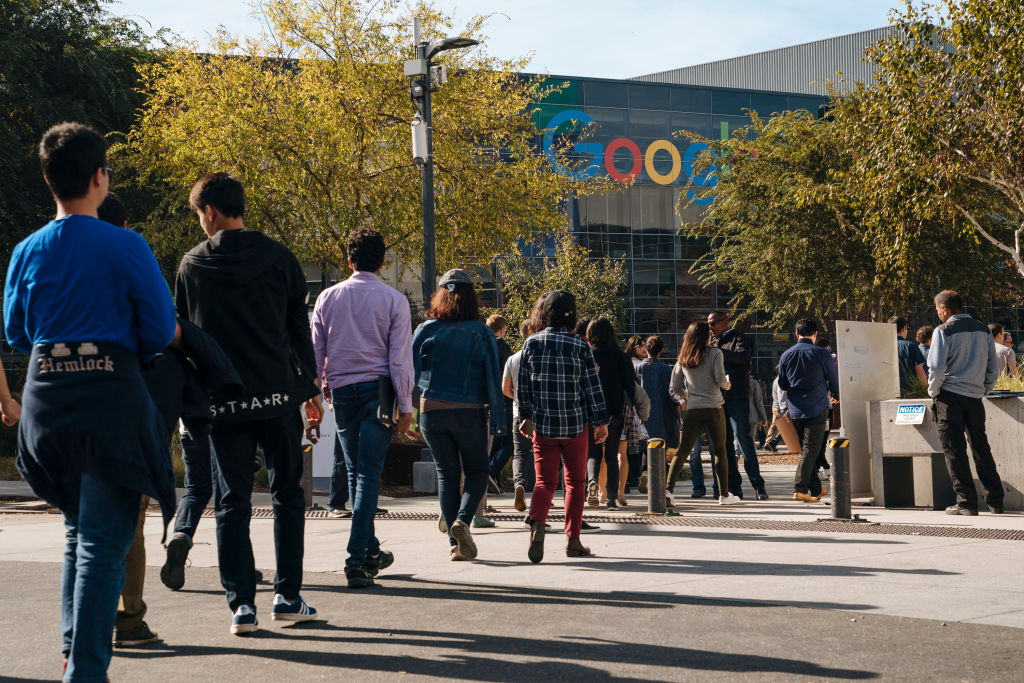
In early 2022, a group of Twitter employees were quietly trying to unionize the company. They called themselves the “Starlings” after the birds whose synchronized flight patterns offer one another safety and warmth. The workers mapped out their coworkers and assessed their pro- or antiunion sentiments, held one-on-one conversations, and tried to stay off of management’s radar while they built toward a majority.Then Elon Musk bought Twitter. Half the workforce disappeared in the first round of layoffs, with cuts falling heavily on trust and safety and other teams where the union had organizers. Twitter’s employee directory went offline, and the offices temporarily closed.Against Tech Oligarchy: Worker Resistance in the World’s Most Powerful Industry, a new book by organizers JS Tan and Clarissa Redwine, begins with the Twitter organizing drive. Redwine, who had helped unionize Kickstarter, joined the Twitter campaign in early 2022; Tan, coming off a successful graduate worker drive at the Massachusetts Institute of Technology, joined a few months later. They were still organizing when Musk took over, suddenly making much of the work they had done impossible to continue.“With half the company gone and internal organizations completely decimated,” write Tan and Redwine, “the most basic steps of the Recognition Playbook — from mapping the workplace to conducting one-on-one conversations — had suddenly become exceptionally hard.” The union drive died.The authors had arrived at the Twitter campaign after years of organizing in and around the tech industry. Tan was a software engineer at Microsoft when, in 2019, he traveled to Kazakhstan to show Chevron employees how Microsoft’s machine-learning tools could be used in an oil field. While he was there, Amazon employees published an open letter demanding that their employer stop building custom tools for oil and gas companies. Tan was doing that work for Microsoft.When he returned home, he anonymously wrote about the trip. “Oil Is the New Data” described Microsoft helping Chevron increase oil production and Chevron employees asking about using technology to monitor workers. “We knew that they simply wanted a way to discipline their low-wage Kazakhstani workforce,” Tan wrote. “We knew they wanted a way to squeeze as much work as they could from each worker.” In Against Tech Oligarchy, he and Redwine supply the part that did not appear in the article: “JS was interrogated and eventually pushed out” for publishing it.Redwine’s route into the movement ran through Kickstarter, where a union drive had stalled at just over 50 percent support by the summer of 2019. (Most union drives build to supermajority support before calling for a vote, since support for the union inevitably flags in the face of antiunion measures by the boss.) She and two other visible organizers were fired; Kickstarter denied that the firings had anything to do with the union.The firings had the opposite effect from the one organizers feared. “Instead of killing the campaign,” Tan and Redwine write, “the firings reignited it.” People who had been sitting on the fence showed up to a union meeting. In February 2020, Kickstarter workers voted 46–37 to unionize.Tan and Redwine went on to help other tech workers pursue the same basic strategy: organize a majority, win recognition, bargain a contract. But Against Tech Oligarchy looks back at that turn with considerable doubt. Wages, benefits, and job security increasingly took precedence over fights about what the companies were building in the first place. And the drive to build overwhelming support before taking on management gave workers fewer chances to learn through conflict, leaving them woefully unprepared for the scorched-earth response that came once they challenged their employers.Tan and Redwine are reconsidering advice they once gave workers themselves. Much of the book is an effort to understand why all the organizing in tech over the past decade has left workers with so little lasting power.The Tech Worker MovementUnion drives like Kickstarter and Twitter grew out of a tech worker movement whose ambitions initially extended well beyond winning better conditions at work. Tan and Redwine were both members of the Tech Workers Coalition, which argued for an expansive definition of who counted as a tech worker, including contractors, cafeteria workers, content moderators, and office workers alongside engineers and designers. For the authors, that definition is essential: without a common struggle between engineers and “the cafeteria staff who fed them, or the content moderators who kept the internet clean,” the authors write, “any challenge to tech capital would remain partial and fragile.”At Google, the first big fight came over Project Maven, a Pentagon program using artificial intelligence to analyze drone footage. The contract drew a revolt inside the company. Thousands of employees signed a letter opposing the work, and several quit. Google eventually said it would let the contract expire. Later that year, some twenty thousand Google employees walked out over the company’s handling of sexual harassment.Management initially made an odd show of embracing the walkout. Organizer Claire Stapleton’s manager gave her a pair of Dr Martens to commemorate it. But before long, Stapleton and fellow organizer Meredith Whittaker said the company retaliated against them, and both eventually left.The fight over dissent continued with Timnit Gebru, the coleader of Google’s Ethical AI team. After a dispute over a paper in December 2020, Gebru said Google fired her; Google claimed it had accepted her resignation. Her departure prompted months of protest inside the company.By then, tech workers had also discovered the limits of publicity as a source of leverage. Tan and Redwine found that leverage from press attention “peaked sharply within the first forty-eight hours and quickly vanished from public consciousness as attention shifted to the next news cycle.” Public campaigns also required recognizable spokespeople, giving management “clear targets for retaliation.” Thousands of people might sign a letter or join a walkout without having built the relationships needed to sustain a fight. The actions, the authors write, were often driven by a handful of people and could function “quite effectively on shallow relationships and temporary participation.”The turn toward unions came out of those experiences. The earlier campaigns could bring thousands of workers into action without building an organization capable of surviving retaliation or the end of the news cycle. The standard organizing path recommended by the international unions that tech workers began affiliating with — what Tan and Redwine call the “Recognition Playbook” — offered a different approach: build a representative organizing committee, develop majority support, win voluntary union recognition or a National Labor Relations Board election, and bargain a first contract. That slower work promised to leave workers with something durable when a particular fight was over. By 2021, a year after Kickstarter workers won their union, there were fifteen newly minted tech unions.“Whereas ethical and social issues, such as curbing emissions or canceling military contracts, animated the previous era of the movement,” Tan and Redwine write, “the new playbook called for a focus on bread-and-butter issues”: pay, health care, job security. In 2018, roughly 80 percent of documented collective actions in tech concerned issues beyond the workplace. By 2022, fewer than one in five did.Tan and Redwine eventually became staff organizers for the United Electrical, Radio and Machine Workers of America (UE), which the Starlings affiliated with as their campaign grew. At Twitter, they put this approach into practice, helping the committee work quietly toward the goal of a supermajority.“As we grew closer to the formal labor establishment,” they write, “our own sense of what was possible narrowed.” Their “fervor for ambitious social and political demands gave way to a focus on bread-and-butter issues” that could more readily be won in a contract. They came to believe that the strategy had done something more damaging too: it deferred conflict until workers had accumulated enough support to win. But “experiencing conflict is an essential part of union building”: delaying it deprives workers of the moments that teach them “what tactics are effective against the boss and how the boss might respond to a challenge.” Later in the book, New York Times Tech Guild organizer John Cruickshank distills the problem: “Action builds capacity for action.”The Recognition Playbook narrowed more than the movement’s tactics. Earlier fights had often been about the work itself. Workers at Google did not want to help the Pentagon analyze drone footage; Amazon workers objected to their company helping oil and gas companies extract more fossil fuels. A union contract gave organizers something concrete to fight for, but it also tended to put wages, benefits, and job security at the center of the campaign. Whether workers should be building a particular technology in the first place was harder to fit into that model. The challenge is how to combine the ambitions of that earlier movement with an organization capable of making them costly for an employer to ignore.Some of the book’s strongest analysis concerns how changes in the industry itself have altered workers’ leverage. For years, tech companies competed fiercely for skilled workers. One former Facebook employee recalled Meta “just hoarding us like Pokémon cards.” A worker unhappy with a job could often get more money by going somewhere else. That became a less reliable option once companies started laying people off. More jobs were being done by contractors too: by 2023, they accounted for nearly one in five tech jobs, three times the share two years earlier. And for workers on visas, getting fired or laid off carried another risk: eventually, they could lose the right to stay in the country. Fighting had become more expensive.Learning How to StrikeWhat happened at Twitter after Musk’s takeover made the problem of worker leverage unusually stark. He eventually eliminated close to 80 percent of Twitter’s workforce, producing what Tan and Redwine call “a sudden withdrawal of labor on a massive scale.” But the company continued to function: “The code still executed, the servers still hummed, and the ads kept generating revenue.”The New York Times Tech Guild offered another test. More than six hundred workers unionized in 2022 and spent more than two years bargaining a first contract. In November 2024, they walked out just before the presidential election, when the paper expected enormous traffic. But in the weeks before the strike, management told employees to “gold-plate” the platform, and workers helped prepare the site to withstand their absence. Eight days later, the strike was over and the site had kept running.Some of the obstacles here are hardly particular to tech. High turnover, fragmented workplaces, management delay, drawn-out legal processes, and workers’ reluctance to take risks for gains they may never see are familiar well beyond tech companies. The nature of the work is different. In much of the industry, Tan and Redwine write, “the whole point of tech work is to automate production and build products, platforms, and services able to run without workers present. . . . When labor stops, code keeps running.” They argue that “the way in which workers can strike effectively has yet to be discovered.”AI may further weaken some tech workers’ leverage. It can transfer control “from workers to algorithmic systems owned by employers,” taking workers’ “tacit knowledge that had previously resisted codification” and embedding it in the tools themselves. Managers have long sought to take knowledge that resides with workers, break it into reproducible parts, and put greater control over the labor process in their own hands. AI gives that process a peculiar form in tech, where some of the workers whose knowledge can be captured by the technology are also building it.AI is also changing the industry’s physical geography. Tech was never immaterial: its software and platforms have always depended on mines, chip fabs, warehouses, electrical grids, and enormous workforces. But the platform companies could expand into new markets without building much new fixed infrastructure in each place they entered. Building AI requires data centers, chips, huge amounts of electricity and water, and a great deal of capital. Those facilities, Tan and Redwine write, depend on “state-issued permits, access to municipal water, favorable electricity pricing, and local zoning approval.” Tech is becoming “anchored in national territory and contingent on political approval.”The build-out may also create new sources of worker power. Data centers cannot be moved at the speed of software. They need electricity and water from the surrounding area, and workers have to build it and keep it running. AI may make some tech workers easier to replace while making the industry more reliant on others.Building all of this also brings tech companies into much closer contact with the state. The AI boom has made companies that once styled themselves as largely independent of government increasingly reliant on energy policy, permits, infrastructure, and other forms of public support. In January 2025, Donald Trump appeared at the White House with Sam Altman, Larry Ellison, and Masayoshi Son to announce Stargate, a planned AI infrastructure investment of as much as $500 billion.Tan and Redwine’s “tech oligarchy” is an economic elite increasingly acting together politically, with corporate power deeply entangled with state power. Workers were discovering themselves as workers at roughly the same time that their bosses were discovering themselves as a class.By the end of Against Tech Oligarchy, Tan and Redwine have come a long way from the Recognition Playbook they once promoted. They want to recover some of the ambitions of the movement’s beginnings, when workers asked why they were building military technology, software for immigration enforcement, or tools they believed would worsen climate change. The book’s final section is called “An Invitation,” and that describes its spirit: an attempt to leave other workers a record of the path they took, including the wrong turns, so they might get further the next time.Nor can tech workers rein in the class that controls the industry on their own. AI’s physical expansion makes that especially clear. The industry increasingly connects programmers to the workers who build data centers, manufacture chips, maintain servers, supply electricity, and construct the infrastructure on which the tech economy has always depended. If tech’s power now runs more decidedly through infrastructure and the state, figuring out how tech workers can exercise power at work is one part of the problem. Figuring out how that power connects to the power of everyone else with a hand on the same system is another.This article originally appeared in Jacobin, a democratic socialist magazine publishing long-form essays and analysis on politics, economics, and culture. Subscribe to the print edition for $20 a year.
Visit somethingsdifferent.biz for more information.