MMRDA Rules Out Major Alignment Changes To Thane Coastal Road Phase II, Cites Traffic Decongestion And Seamless Connectivity With Mumbai
· Free Press Journal
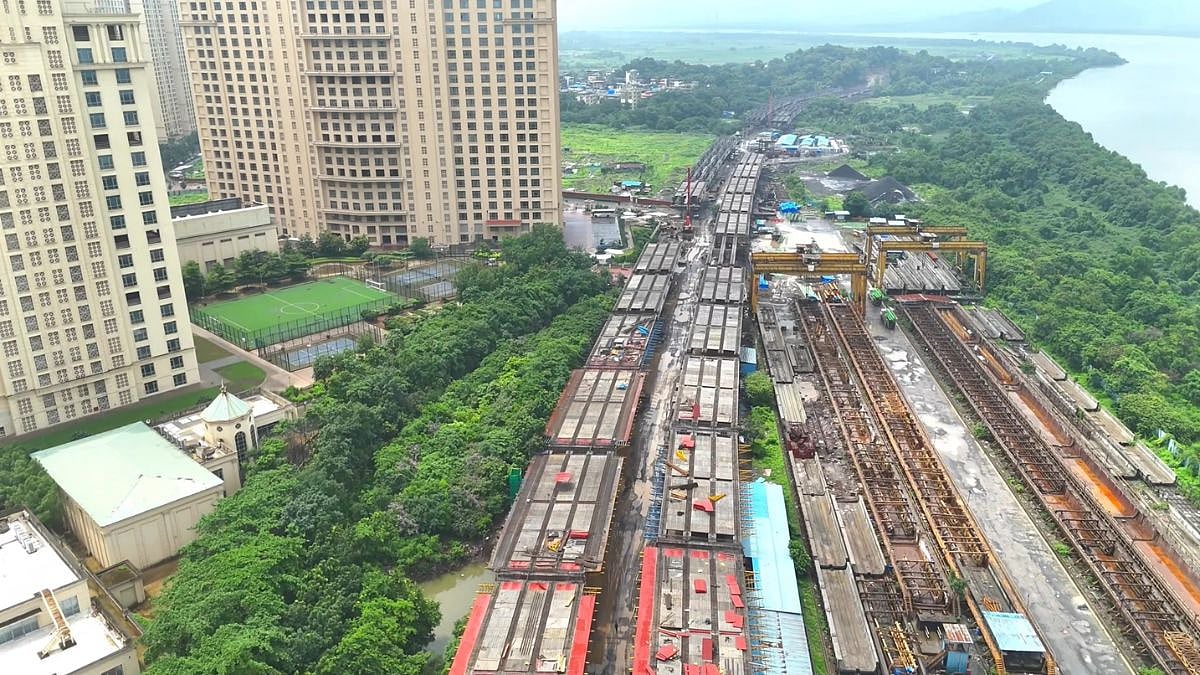
Mumbai: The Mumbai Metropolitan Region Development Authority (MMRDA) has ruled out the possibility of substantially changing the alignment of the Thane Coastal Road Phase II, stating that the proposed route is essential for reducing traffic congestion in Thane and ensuring seamless connectivity with the first phase of the corridor and other planned infrastructure links.
Also Watch:
Visit afnews.co.za for more information.
The authority’s stand was recorded during the 202nd meeting of the Maharashtra Coastal Zone Management Authority (MCZMA), held on September 24, 2026, while considering the proposal to construct the 7.129-km elevated road from Balkum to Anandnagar in Mulund East. The project, which passes through mangroves and an ecologically sensitive zone of the Thane Creek Flamingo Sanctuary, had earlier been deferred by the coastal authority for want of information on alternative alignments and the project’s environmental impact.
In its compliance submitted to the MCZMA, the MMRDA stated that the proposed route is an essential continuation of Thane Coastal Road Phase I and is designed to integrate with key regional infrastructure, including the proposed Kopri-Patni Bridge, the proposed Eastern Freeway Extension at Anandnagar and the Eastern Express Highway.
“changing the alignment would disrupt regional connectivity and undermine the road’s objective of easing major traffic bottlenecks between Thane and Mumbai,“ as per the MMRDA clarification.
The Thane Municipal Corporation, which submitted compliance on the queries raised by the MCZMA, also stated that the alignment had been finalised through the prescribed Development Plan modification process, following the invitation and consideration of suggestions and objections under the applicable provisions of the prevailing Unified Development Control and Promotion Regulations.
The MMRDA maintained that the route runs between existing developments on its western side and Thane Creek on the eastern side, leaving no alternative alignment that could substantially reduce the impact on mangroves and the Eco-Sensitive Zone (ESZ). It submitted that the selected alignment was finalised with the objective of minimising the possible ecological impact while maintaining the road network’s continuity.
A bypass for Thane’s growing traffic
The Thane Coastal Road is planned as an alternative bypass corridor for traffic moving through Thane city. It originates near Gaimukh on Ghodbunder Road and runs southwards, largely parallel to the western bank of Thane Creek, before terminating at Anandnagar in Mulund East on the Eastern Express Highway.
The corridor is being developed in two phases. Phase I runs from Gaimukh to Kasheli Bridge on National Highway 848, while Phase II extends from Kasheli Bridge to Anandnagar. The second phase begins near the western abutment of Kasheli Bridge at Kharegaon and proceeds towards the Eastern Express Highway near Mulund Toll Plaza.
The proposed route will cross the Thane-Nashik Highway (NH-160), the western approach to Kalwa Bridge and the Thane-Kalyan railway line before reaching Anandnagar.
MMRDA officials told the MCZMA that the existing road network, particularly the Eastern Express Highway and Thane-Ghodbunder Road, faces limitations in accommodating the region’s growing traffic. The Eastern Express Highway serves Mumbai, Thane, Bhiwandi and Kalyan, while Ghodbunder Road connects Thane with Vasai-Virar and destinations towards northern India.
The authority argued that a bypass is necessary to divert regional and non-local traffic away from the heart of Thane. It said the project is intended to reduce road accidents, air and noise pollution, improve transport efficiency and limit the economic losses caused by high vehicle operating costs and delays in passenger and freight movement.
Environmental concerns over mangroves and flamingo sanctuary
The MCZMA had examined the proposal at its 201st meeting on August 11, 2026, when expert members observed that a substantial portion of the alignment passed through mangroves and ecologically sensitive areas. The authority had consequently deferred its decision and sought seven sets of information, including an examination of alternative alignments, a report from the Mangrove Cell, an assessment of the impact on Thane Creek’s ecology and flamingo habitats, an ESZ-related no-objection certificate, a cost-benefit analysis, a flood-impact study and replies to complaints received about the proposal.
The project’s environmental assessment identified 6.61 hectares of impact within the ESZ of the Thane Creek Flamingo Sanctuary and 2.7215 hectares of forest land involvement. The proposal refers to 3,754 mangrove trees. The reported permanent mangrove impact is 1.7472 hectares, while the temporary impact is 2.7225 hectares.
To limit the ecological footprint, the MMRDA has proposed an entirely elevated viaduct through the sensitive stretch, supported on piers rather than continuous ground-level embankments or reclamation. It has also increased the standard span between piers from 30 metres to 50 metres to reduce the number of foundations and confine permanent mangrove diversion to the pier and pile-cap footprints.
The construction plan proposes reverse circulation drilling for foundation work and precast girders for the superstructure, with the stated objective of reducing disturbance during construction.
The submission divides the affected mangrove area into three categories: 1.7472 hectares, or 13.73%, for permanent diversion; 8.2518 hectares, or 64.86%, expected to remain undisturbed even during construction; and 2.7225 hectares, or 21.40%, temporarily affected during construction and proposed to be restored after completion. The figures in the submission also indicate 680 mangroves in the permanent-diversion category, 2,021 in the undisturbed category and 1,053 in the temporary-impact category.
Flamingo habitats, fishing activity and construction safeguards
The environmental impact assessment (EIA), prepared by NABET-accredited consultant Enviro Resources Pvt Ltd, identifies potential effects on intertidal mudflats, mangrove patches and tidal creeklets. Piling, pile-cap construction, pier erection, temporary access bridges and the movement of barges and construction equipment could generate underwater noise, vibration, turbidity and temporary disturbance to aquatic habitats.
The assessment states that these impacts are expected to be localised, temporary and reversible if suitable mitigation measures are implemented. Proposed safeguards include vibration-dampening technologies, disposal of excavated material at a designated spoil ground, and measures to prevent construction debris and floating waste from entering tidal waters.
The project will also have to address possible temporary restrictions on access to fishing grounds and navigation routes, interruptions to fishing activity and the risk of damage to fishing nets or gear. The MMRDA has been asked to ensure that fishing communities’ livelihoods are not affected and that local fishermen retain free and uninterrupted access for operating their boats.
Additional measures for the sanctuary’s birdlife include avoiding prolonged disturbance near flamingo feeding and roosting sites, maintaining safe distances between construction vessels and bird congregation areas, and prohibiting drone operations over major congregation and roosting habitats unless specifically authorised by the Forest Department. Bird congregation areas are to be marked as no-disturbance zones, while high-disturbance work may have to be temporarily suspended if unusually large congregations of flamingos or other migratory birds are observed near the work area.
MCZMA recommends proposal to Centre with conditions
After considering the compliance and EIA report, the MCZMA recommended the project to the Union Ministry of Environment, Forest and Climate Change (MoEF&CC), New Delhi, subject to strict environmental and statutory conditions. Since the proposal traverses CRZ-I and CRZ-IV areas, the authority noted that final CRZ clearance must be considered by the ministry under the CRZ Notification, 2019, read with the relevant clarification issued on November 29, 2022.
The conditions include obtaining prior permission from the Bombay High Court, as the project affects mangroves and the 50-metre buffer zone. The authority must also undertake compensatory mangrove plantation in consultation with the Mangrove Cell, obtain a no-objection certificate from the Mangrove Cell, secure forest clearance.
The MCZMA has further called for effective implementation of the Environmental Management Plan during construction and operation, with third-party monitoring or audits by a government agency. The Thane Municipal Corporation has been asked to establish a dedicated Environment Management Cell to oversee environmental management, marine biodiversity conservation and the recommendations of socioeconomic and disaster-management studies. The cell is also expected to monitor changes in the shoreline, including erosion and accretion, through competent agencies for at least 15 years, with a specific budget allocated for the purpose.
Other conditions require noise barriers at appropriate locations, no labour camps within CRZ areas, mobile toilets with mobile sewage treatment plants at work fronts, scientific processing of construction debris at designated locations, and compliance with the recommendations of socioeconomic, disaster-management and traffic studies. All other statutory permissions must be obtained before work begins.
Status on Thane coastal Road Phase 1
Thane Coastal Road-1 has achieved 40% overall progress in 14 months, with foundation work, pier-cap casting and girder erection advancing along the 13.45-km corridor, according to the project update last month in September.
The six-lane, access-controlled greenfield corridor between Kharegaon Toll Naka and Gaimukh is designed to decongest Ghodbunder Road and improve connectivity between NH-160 (Mumbai–Nashik Highway) and Gaimukh. The project includes a 240-metre creek bridge and an 8.11-km elevated stretch through mangrove areas, with viaducts and bridges planned to minimise the impact on the sensitive coastal ecosystem.
The corridor is expected to improve freight and passenger movement towards Thane, Nashik, Bhiwandi, Gujarat and North India. At Gaimukh, it will connect with the proposed Gaimukh–Fountain Hotel Tunnel, strengthening Thane–Bhayander connectivity.It will integrate with Thane Coastal Road-2, and other upcoming infrastructure projects including the Thane Ring Metro, the Saket–Amane Elevated Corridor and the Kasarvadavali–Kharbhav Road.
To get details on exclusive and budget-friendly property deals in Mumbai & surrounding regions, do visit: https://budgetproperties.in/