Mayor faces charges and criticism over water contamination failures that put lives at risk
· Citizen
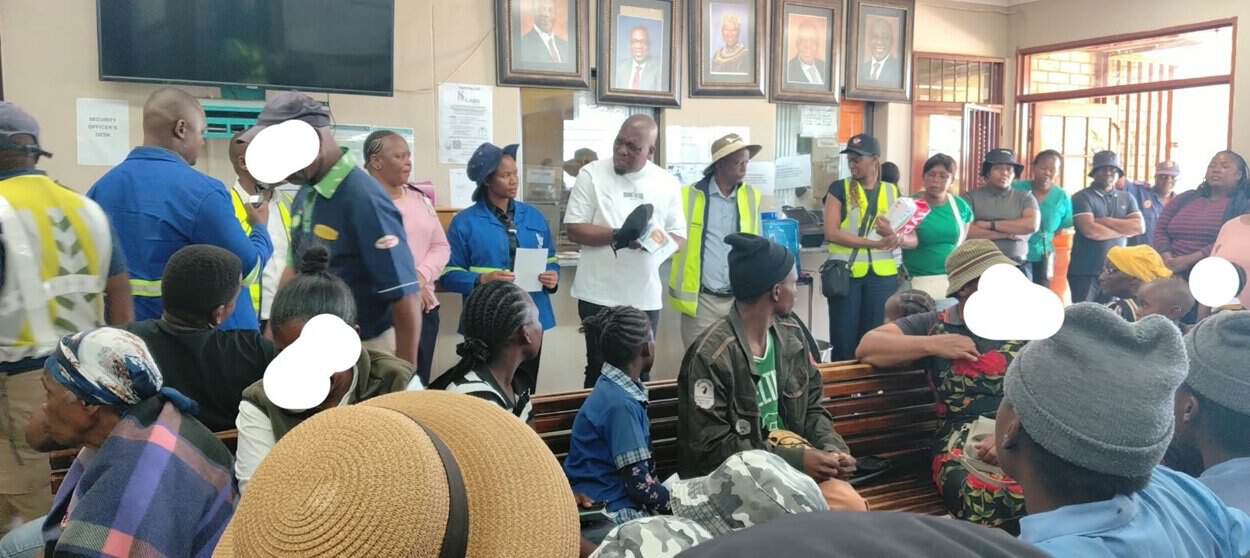
Pressure is mounting on City of Tshwane mayor Nasiphi Moya after the DA and EFF opened cases against her over the Bronkhorstspruit water contamination crisis that has left more than 400 people ill.
The EFF yesterday laid criminal charges against Moya at the Bronkhorstspruit police station, alleging negligence, dereliction of duty and failures in the management of water services, while demanding her resignation.
Visit somethingsdifferent.biz for more information.
DA and EFF open cases against mayor over water contamination
The move follows similar action by the DA, which has accused the city of a catastrophic leadership failure rather than a simple infrastructure breakdown.
Yesterday’s intervention by EFF Tshwane mayoral candidate Omphile Maotwe follows 408 cases of gastrointestinal illness recorded between 7 and 18 October, with most patients being children under four.
Tests conducted by the National Institute for Communicable Diseases detected pathogens including norovirus, campylobacter and shigella, while water quality tests revealed elevated levels of E. coli and coliform bacteria in water supplied from the Bronkhorstspruit water treatment works and affected reservoirs.
DA Tshwane mayoral candidate Cilliers Brink said this was not an infrastructure issue, but a complete failure of management and leadership.
“It would have never happened under my leadership,” he said. “For three weeks, the water wasn’t treated and the public wasn’t informed.”
Moya said Brink was exploiting the water crisis at a time when residents were concerned about their health and safety.
Brink exploiting water crisis – Moya
“Brink has chosen to amplify fears of another cholera outbreak without adequately explaining the scientific findings,” she said.
“Let me be clear, cholera has not been identified as the cause of the gastrointestinal illness outbreak in Bronkhorstspruit.”
On Monday, Water and Sanitation Minister Pemmy Majodina said: “No cholera bacteria were found in the sampled stools. Water quality tests conducted by the department on 14 October found high levels of E. coli and total coliforms in the water emanating from the Bronkhorstspruit water treatment works and in the Ekandustria [near Dark City] and Zithobeni reservoirs.”
Water Institute of Southern Africa CEO Lester Goldman said the Bronkhorstspruit water crisis highlights the importance of ensuring drinking water treatment processes are properly operated, monitored and supported.
“Safe drinking water is essential to public health and the professionals responsible for treating and monitoring water play a critical role,” he added.
Goldman said while investigations into the Bronkhorstspruit incident continue, there’s a need to establish the circumstances that led to the failure of critical treatment safeguards and identify the measures to prevent a recurrence.
Warning shot for region
Tarryn Johnston, a water intelligence analyst specialising in governance diagnostics and collapse pattern interpretation, said this was a warning shot for the region.
“While it is necessary that the mayor has admitted negligence regarding the three-week failure to chlorinate our water, public admissions do not fix systemic vulnerabilities,” said Johnson.
“Deploying water tankers is a reactionary, short-term patch.”
Johnston said upstream diagnostics that legally prevent infrastructure from running dry of essential purification agents need to be established to ensure communities are never again left exposed to waterborne pathogens.
Motor Industry Staff Association CEO of operations Martlé Keyter said it was alarming that the city’s failed to warn residents.
“The standards for water services require municipalities to notify communities when water is unsafe for drinking, cooking, washing or bathing,” she said.
Alarming that city failed to warn residents
“Yet residents of Zithobeni, Dark City, Rethabiseng, Sokhulumi and Bronkhorstspruit continued using tap water because they were never informed of the risks.
“Families are now paying the price for that failure. Working parents have been forced to buy safe drinking water while covering the costs of medical treatment for the sick.”
Keyter said keeping residents in the dark about untreated water was a betrayal.
“Whether this was negligence, or a deliberate failure to communicate, someone must be held accountable. Our children are not collateral damage,” she said.