Political campaigns have poured $137 million on AI-made ads ahead of a crucial midterm—after spending virtually nothing last election cycle
· Fortune
Just two years ago, ahead of the 2024 presidential election, the use of AI in political ads was nearly unheard of. Today, it’s a nine-figure budget line.
Visit sweetbonanza.qpon for more information.
A new report from the Wesleyan University-based research group Wesleyan Media Project found more than $137 million in spending on 220 campaign videos made at least partly with AI through Oct. 11, ahead of the 2026 midterm elections. By comparison, the group detected less than $50,000 in spending on AI-generated ads in 2024 campaigns.
“It is a large number, definitely, especially when you consider we went from about zero in spending on AI ads in the last election cycle,” Travis Ridout, co-director of the Wesleyan Media Project and professor of political science at Washington State University, told Fortune. “That’s what’s really striking.”
The magnitude of funding being poured into AI ads is not just evidence of how consequential this election cycle is, but also how pervasive artificial intelligence has become in content creation. The use of AI can range from a replacement for stock footage like a handshake to the likeness of a candidate. But the broad use of AI without much restriction or regulation has raised concern among both candidates and researchers about the spread of misinformation from the ads. More than 70% of AI campaign videos did not contain a disclaimer or disclosure that they were generated by or contain AI, the report found.
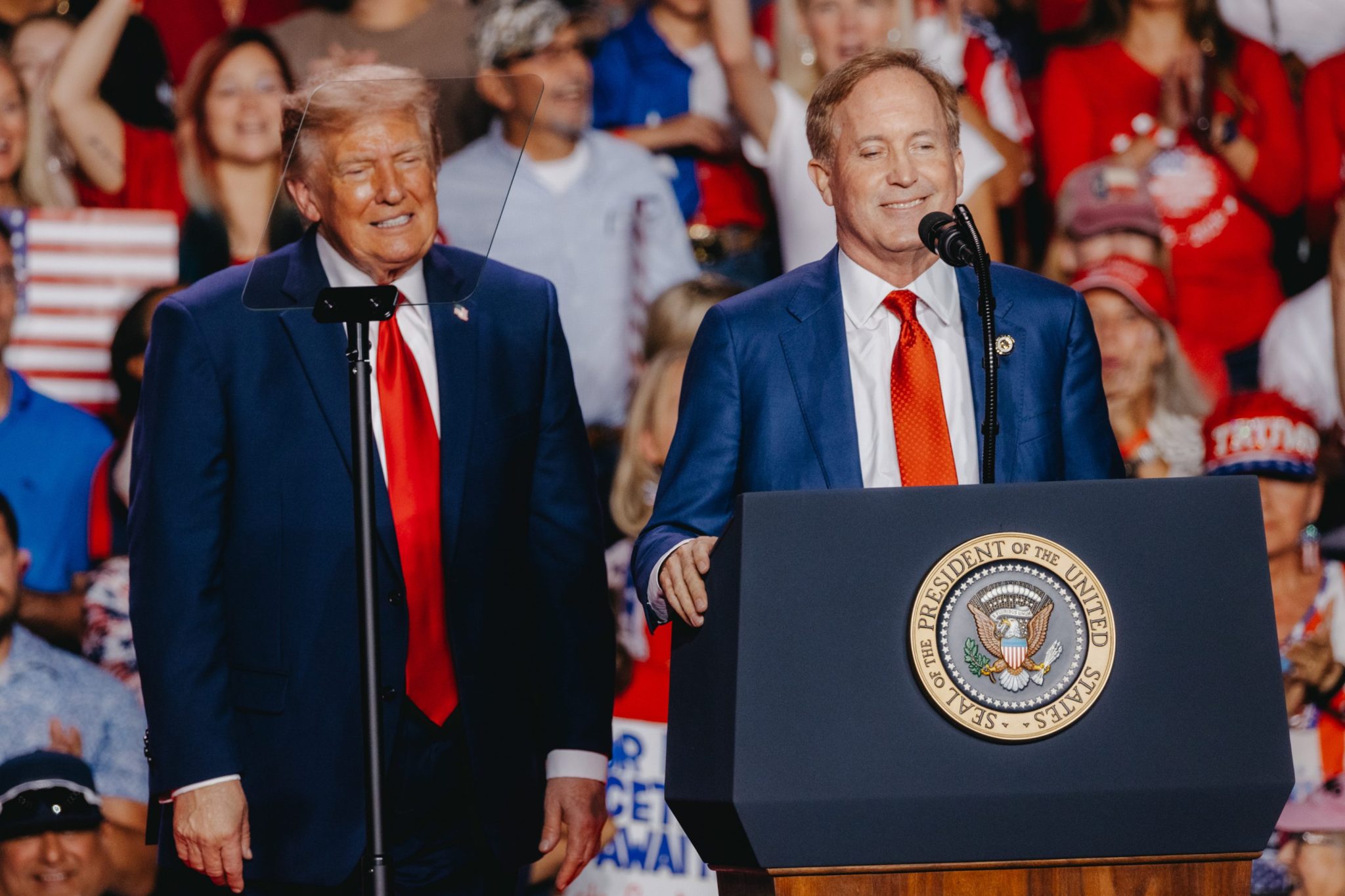
AI ads have taken the forefront of some of the U.S.’s most contentious and expensive campaigns, including the Texas Senate race between Democrat James Talarico and Republican Ken Paxton. One Paxton campaign ad depicted an AI-generated Talarico writing in a Bible with a crayon and delivering a fabricated monologue on God and gender. Talarico responded by saying he has tried to ban AI deepfakes through legislation “because they are misleading.”
“They are lying about a candidate in this race,” Talarico said.
As the new technology pervades the campaign trail ahead of a crucial midterm election, Ridout warned the consequences of AI ads go beyond just individual elections and have the potential to shape the very psychology of elections more broadly. Candidates may spend more of their time combatting misinformation as opposed to sharing their platform, Ridout said. Despite voters recognizing these ads as AI, they may still be influenced by the misinformation they contain. Others may become skeptical of candidates’ credibility
“For voters, there’s a temptation to say, ‘I don’t know what to believe anymore, and so I’m not going to believe anything,’” Ridout said. “That makes voting on the basis of facts quite difficult.”
Voters’ changing perceptions of AI
According to the report, Republicans are the primary drivers of AI-generated ads: Republican campaigns or political action committees accounted for 81% of the ads and 88% of the spending.
Ridout attributes this to the party’s more favorable view of the technology. He said that despite AI video capabilities being around for a couple of years, political campaigns are slow to adopt new technologies out of an abundance of caution over campaign ethics and how campaign tactics would be perceived by their respective parties’ bases. Because Republican leaders like President Donald Trump have been outspoken about their support for the AI infrastructure buildout, Republican voters are more likely to respond neutrally or favorably to AI-generated ads, Ridout explained.
But attitudes towards AI, even among Republicans, are changing, and that has the potential to shift attitudes around AI campaign ads more broadly. One Gallup poll found 70% of Americans oppose data center construction in their local area, including opposition from 75% of Democrats and 63% of Republicans. In one rural community in Pennsylvania, data center protests were a nonpartisan issue according to protesters.
“It’s invigorating, in the sense that you’re meeting people who might not be like-minded on a lot of things, but it feels for so many people like this a righteous cause,” one Sugarloaf Township, Pennsylvania, protester told Fortune. “We can maybe disagree on the political finer points of things, but we can find this very real camaraderie in the midst of everything.”
The proliferation of AI isn’t all negative for some candidates. Ridout argued AI ads eliminate the need to film B-roll or film on-location, making it easier for candidates with tighter budgets to put out campaign videos and gain exposure they wouldn’t have gotten otherwise.
Some ads defy clear-cut logic or voter attitudes around AI, an indication of the integration of this technology into advertisements still being in its infancy. Ridout recalled an AI-generated ad from Pennsylvania Republican candidate for governor Stacy Garrity depicting Democratic Gov. Josh Shapiro proudly espousing his support for AI data centers—an apparent paradox of using AI to criticize a candidate for supporting it. The ad discloses its AI origins, opening with the line “This ad was created with AI, thanks to big, beautiful data centers.”
“Everyone’s still trying to figure this out right now,” Ridout said.
This story was originally featured on Fortune.com