Elections in a Genocidal State Are Not Democratic
· Jacobin
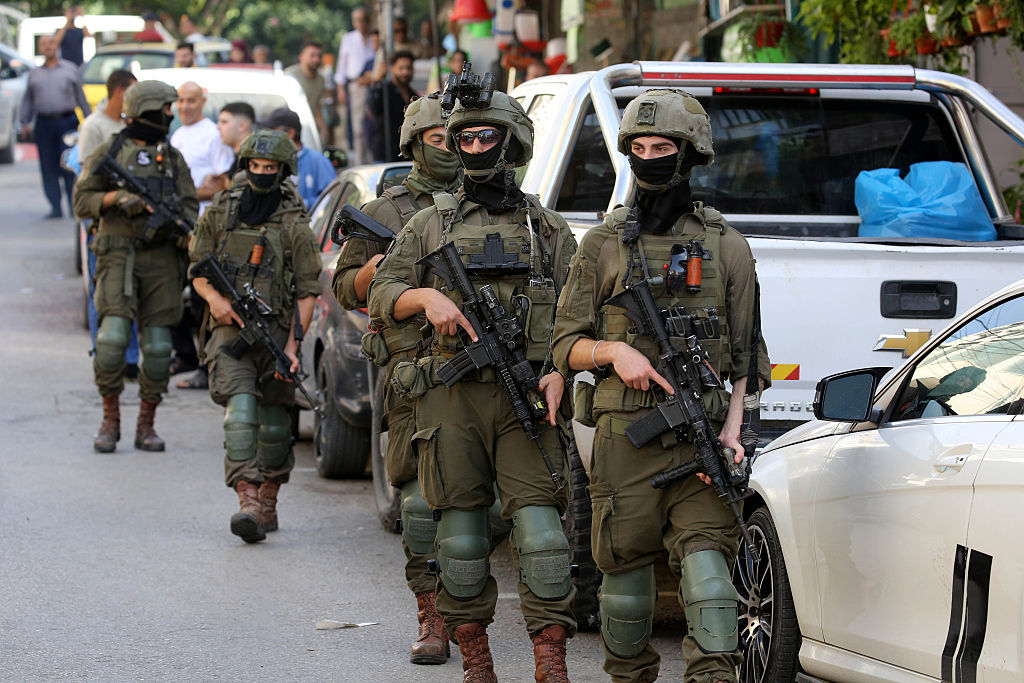
The recent Israeli elections are a grotesque spectacle. They are grotesque because Israel is a state perpetrating genocide against Palestinians in the Gaza Strip, cheered on by most of its Jewish citizens. They are grotesque because they peddle the lie of democracy in a state subjecting millions of Palestinians in the West Bank and the Gaza Strip to a brutal military occupation for nearly six decades, without basic rights, dispossessing them to settle more than 750,000 Jews in crude violation of basic international law. And they are grotesque because they promote the illusion, both within and outside Israel, that nearly two million Palestinian citizens of Israel somehow hold the key to saving the state from itself. A genocide state and society, however, will do what a genocide state and society does: destroy the people it considers its enemies, especially those it sees as the enemy within.These elections, in other words, should trigger alarm and open our eyes: we have not seen the worst of Israel’s genocidal assault against Palestinians, against all Palestinians under Israeli rule.Instead we are drowned in reporting about the Israeli election results as a divide between a bloc led by Prime Minister Benjamin Netanyahu against a bloc opposing him, averting our gaze from the obvious and overwhelming majority bloc of ninety-three mandates (out of 120) that support Jewish supremacy and genocide. That very real majority includes the opposition party Yachad (in English: “Together”) that two former Israeli prime ministers lead, Yair Lapid and Naftali Bennett, the latter of whom on October 12, 2023, shouted at a Sky News anchor: “Are you seriously asking me about Palestinian civilians? What is wrong with you? We’re fighting Nazis.”Supporters of Jewish supremacy and genocide on the anti-Netanyahu side also include Avigdor Lieberman, a far-right politician and leader of the Yisrael Beiteinu (“Israel Is Our Home”) party who, as defense minister in April 2018, praised an Israeli sniper who had shot an unarmed Palestinian man during the Great March of Return in Gaza. A soldier nearby caught the sniper’s war crime on video. As the Palestinian man falls to the ground, either the shooter or the soldier recording the act says in Hebrew, “Wow. What a video! Yes! That son of a b-tch.” Lieberman had this to say about the sniper: “He deserves a medal.”So much change awaits us with Bennet and Lieberman. But the greatest promise for something new comes from Gadi Eisenkot, former Israeli army chief of staff and leader of Yashar (in English: “Straight”), the main opposition party. Yes, the same Eisenkot who in 2008, as a general and chief of Northern Command, explained the Dahiya Doctrine, his method of mass murder of civilians in Beirut two years earlier:What happened in the Dahiya quarter of Beirut in 2006 will happen in every village from which Israel is fired on. . . . We will apply disproportionate force on it and cause great damage and destruction there. From our standpoint, these are not civilian villages, they are military bases. . . . This is not a recommendation. This is a plan. And it has been approved.Planned, approved, and implemented — and then, also morphed into the Gaza doctrine, already well before October 2023, and back again to Lebanon in the last two years for more of that “great damage and destruction” that we can expect in the unlikely event of an Eisenkot-led, post-Netanyahu Israel.It is, however, that longtime leader of Israel’s opposition, Yair Lapid, the poster boy of Israeli secular liberalism, who perhaps most signifies the danger of Israel’s genocide now escalating further. Lapid rose to political prominence in Israel’s elections in January 2013. Palestinian political parties then received eleven mandates, significantly less than the unprecedented success in the form of nineteen mandates that they won in the recent elections. Netanyahu was the sitting prime minister then too, and his Likud party gained thirty-one mandates in 2013 (it secured twenty-seven now). Lapid’s party then, Yesh Atid (in English: “There is a Future”), trailed behind with nineteen.It was thus clear that any challenge to Netanyahu would require a coalition with Palestinian parties. But Lapid quickly clarified that such a scenario is “off the table.” Lapid proceeded to delegitimize all Palestinian political parties and, by implication, more than 1.6 million Palestinian citizens of Israel then, 20 percent of the state’s citizens. Lapid had promised his voters, in the name of his party then, a future, a different future. Clearly he assumed that all his voters were Jews, and that the Israeli future he envisioned belonged to them and them alone.All Israeli governments since then, including the one led by Lapid in 2022, operated according to this Jewish supremacist logic, intensifying the discrimination, oppression, apartheid, mass violence, and, after October 2023, genocide against Palestinians. This is the defining feature of the charade of Israeli democracy: the extremely violent urge to eliminate Palestinians that Netanyahu, Lapid, Bennet, Eisenkot, and Lieberman share, together with the vast majority of Israeli Jews who voted for them in the past and now.Par for the CourseThis should surprise no one who knows anything about the Israeli state. In 2018, the Knesset (Israeli parliament) passed the Jewish Nation-State Law — one of the state’s basic laws, which function as a de facto constitution — that relegates Palestinian citizens to second-class status. Then, in May 2021, as many Israeli Palestinians came out to protest an attack on Palestinians in occupied East Jerusalem and a related Israeli attack on Gaza, the Israeli police responded with massive repression and violence, arresting hundreds. The situation deteriorated quickly, as Jewish and Palestinian citizens clashed across Israel — in some places, as in Haifa, with Jewish citizens attacking Palestinian citizens on the streets and, aided by the police, breaking into houses of Palestinians and attacking them there.The attack on Israeli Palestinians intensified significantly in the weeks following the Hamas-led attack on Israel on October 7, 2023, and Israel’s subsequent genocidal assault on Gaza: Israeli police arrested over 250 Israeli Palestinian for any expression of identification with Palestinians in Gaza, with then–Israeli Police Commissioner Yaakov “Kobi” Shabtai threatening to expel them to Gaza. A large-scale poll among Israeli Jews a year and a half later, in March 2025, confirmed that many of them would approve of such action: 56 percent supported the expulsion of all Israeli Palestinians. Itamar Ben-Gvir, the far-right settler who serves as Israeli minister of national security, compounded Shabtai’s threat by distributing thousands of weapons to Israeli Jews to form hundreds of civilian “self-defense” units within Israel and in the occupied West Bank.Israeli media and society added fuel to this fire, with Israeli journalists calling for large-scale killing and destruction in Gaza, as David Mizrahi Wertheim did already on October 7 when he suggested on social media to “turn the [Gaza] Strip into a slaughterhouse.. . . . we are facing human animals.” As Israeli American Pennsylvania State University sociologist Tamir Sorek has shown, this crude dehumanization and bloodlust persisted well beyond the days following October 7. A bit more than two months later, on December 26, 2023, former soccer star and TV commentator Danny Neuman said that “in Gaza, without exception, they are all terrorists, sons of dogs. They must be exterminated, all of them killed.” On February 8, 2025, to take another example, Kinneret Barashi, a lawyer and a television host, tweeted that “every trace of the murderous mutations in Gaza must be erased, from the delivery rooms to the last elderly person in Gaza.” The list goes on and on.The Israeli elections, in other words, took place in the context of Israel’s ongoing genocide in Gaza, in an Israeli society immersed in genocidal discourse, and with Palestinian citizens considered second-class and suspected as dangerous. Netanyahu amplified this discourse on election day when he raised the false charge that Palestinian political parties are “stealing the elections.” As the success of Palestinian political parties became clear, he said that they were plotting the destruction of the Jewish state and, without evidence, that Qatar and Turkey somehow bribed Palestinians to vote.While many Israeli Jewish politicians in the anti-Netanyahu camp reject these accusations, they nevertheless reproduce their rationale by calling to create a Zionist government without Palestinian political parties. It may happen that the Jewish religious Orthodox and ultra-Orthodox parties agree to join a coalition led by Eisenkot, even though they fiercely oppose his plan to recruit them into the Israeli army. Alternatively, a “unity government” with both Eisenkot and Netanyahu might emerge, even though Eisenkot has promised he would not go down that path.What is highly unlikely to happen, in any case, is a government that would challenge Netanyahu’s dangerous anti-Palestinian discourse by including Palestinian politicians as equals, not to mention that Eisenkot is committed to continue Israel’s violent occupation and settler policies in the West Bank and Gaza Strip.An exclusionary political discourse depicting millions of citizens as essentially disloyal should raise alarm wherever and whenever it emerges. In the case of the Israeli state that is perpetrating genocide in Gaza, such a discourse, advanced by the prime minister, points both to the abysmal failure of governments, the United Nations, and the international legal system to stop Israel’s ongoing genocide and to the acute danger of its looming escalation and spread beyond Gaza.Looking at the history of twentieth-century genocides gives a horrific indication of what might await Israeli Palestinians. The Ottoman Empire destroyed Armenian communities and murdered around a million and a half Armenian citizens during World War I on the baseless charge that their loyalty lay with the Russian enemy. In 1994, the Hutu-controlled Rwanda state murdered about eight hundred thousand Tutsis and their Hutu supporters following the invasion in 1990 of the Rwanda Patriotic Front, a Tutsi armed force that sought to topple the government.Israel’s genocide in Gaza has already led to a murderous and destructive escalation of Israeli state and settler violence in the occupied West Bank, with Israeli leaders now speaking explicitly about treating Palestinians in the West Bank like Palestinians in Gaza. Israeli Defense Minister Israel Katz, for instance, referred to the killing and injuring of Israeli soldiers by two Palestinian gunmen outside Hebron on October 23, saying that “every clan neighborhood in Hebron from which the terrorists emerged today will be evacuated of its residents.. . . . Just like in Gaza, just like in Lebanon.” Netanyahu spoke even more directly: “We will act to destroy this place,” also announcing plans for the largest Israeli military operation in the entire West Bank since 1967. “The [Israel Defense Forces are] prepared to carry it out, and we will determine the timing, but it is on the way.”Israel’s election results in the context of the genocide in Gaza, the intent of Israeli leaders to expand it to the occupied West Bank, and the widespread genocidal discourse among Israeli Jews together place all Palestinians under Israeli rule, including Israeli Palestinians, in great danger. The record performance of Palestinian political parties has rendered them, in the eyes of many Israeli Jews in both blocs, particularly problematic in the way they undermine, if not outright threaten, the dominance of Jews in the Israeli state.The sixteen years of the Israeli siege on Gaza before 2023 — the longest siege in modern history — provided clear indications of the impending genocide. To paraphrase Netanyahu, it was on its way. Those who recognize and oppose genocide when the perpetrators declare it openly, in our faces, should resist the temptation to treat the Israeli elections — election in a genocide state — as anything other than a warning sign of even worse to come.This article originally appeared in Jacobin, a democratic socialist magazine publishing long-form essays and analysis on politics, economics, and culture. Subscribe to the print edition for $20 a year.
Visit palladian.co.za for more information.