The Speaker Who Gave the House Away
· The Atlantic
This is an edition of The Atlantic Daily, a newsletter that guides you through the biggest stories of the day, helps you discover new ideas, and recommends the best in culture. Sign up for it here.
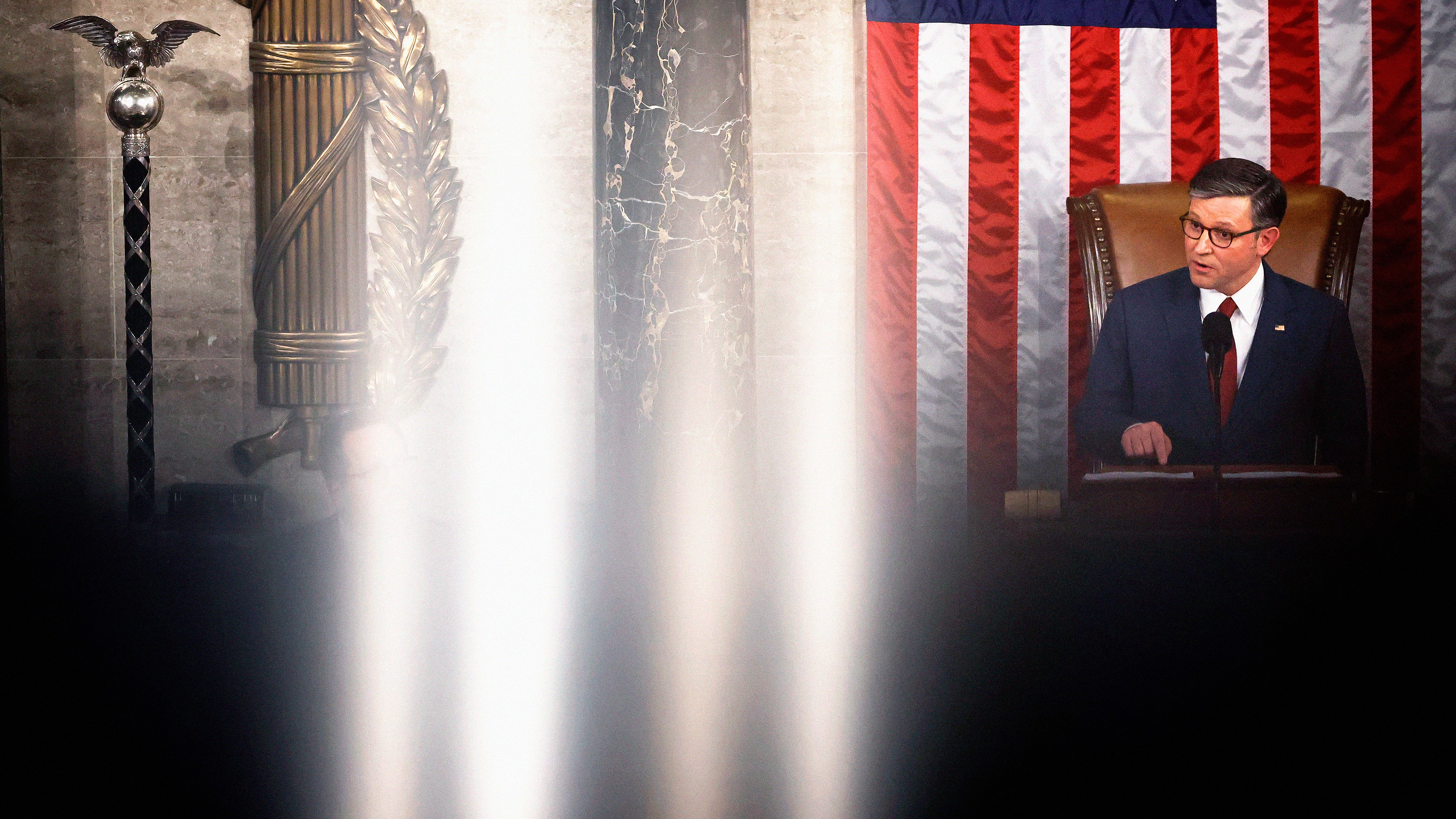
Outgoing Speaker of the House Mike Johnson made a statement earlier this year that captured his approach to the job: “I have no intention of getting in the way of President Trump and his administration.” He was answering a question about levying tariffs, a power the Constitution gives to Congress. Trump grabbed it. Johnson let him.
Visit afrikasportnews.co.za for more information.
That’s been the pattern for most of Johnson’s tenure. When the interests of the White House and the House diverged, Johnson proved loyal to Trump and a traitor to the institution he was supposed to lead. As his run ends, I wonder: Has he been the worst speaker of all time?
His partisan affiliations and views are not the deciding factors in this evaluation. If a speaker is to be judged by the legislation he helped to pass or the worst parts of his ideology or conduct, then each one who entrenched slavery would clearly rank lower. But if a speaker is to be judged on how he performs the core job of protecting the House’s independence and authority over its enumerated powers, then no speaker has done more than Johnson to subvert the constitutional and civic purpose of that vital institution.
In 2016, Johnson, who practiced constitutional law, was elected to the House of Representatives after one term in the Louisiana state legislature. When Trump lost the 2020 election, Johnson helped organize and signed an amicus brief in a lawsuit that sought to overturn Joe Biden’s victories in Georgia, Michigan, Pennsylvania, and Wisconsin. After the storming of the U.S. Capitol, Johnson joined Republicans who wanted to overturn Biden’s wins in Arizona and Pennsylvania. That readiness to subordinate the will of American voters to Trump’s ambitions may have helped Johnson become speaker in 2023, and it foreshadowed his sycophancy after Trump’s return to office.
The power of the purse is a key function of the House, yet Johnson sided with Trump, and against horrified fiscal conservatives, to pass a spending bill that violated his own standard of how to wield that power responsibly. The One Big Beautiful Bill Act, the most significant legislation that he engineered into law, is expected to increase deficits by trillions of dollars—despite Johnson’s own promise to resolve what he rightly describes as “unprecedented debt and spending” that jeopardize the country’s stability and security.
Power over tariffs, declarations of war, and oversight of the executive branch are other core responsibilities of Congress. On tariffs, Johnson did not merely acquiesce as Trump usurped an Article I power to impose duties on foreign nations (a congressional authority that Johnson had once sought to protect before he became speaker)—he took steps to stymie the ability of fellow House members to cast votes against the president’s tariffs.
This speaker has repeatedly acted to stop the House from speaking. When Trump launched a war against Iran, without congressional approval or public support, Johnson tried to shut down floor action to prevent a war-powers vote that would rebuke him. When House members attempted to force the release of files associated with the Jeffrey Epstein investigation in 2025, Johnson adjourned the session early, sending lawmakers home to delay a vote. After the Democrat Adelita Grijalva won a House seat in an Arizona special election that September, Johnson delayed swearing her in for 50 days, a dereliction of his duty to ensure that his fellow Americans were represented. Democrats accused him of stalling because her signature on the Epstein petition would have forced a vote. (Johnson denied that the Epstein matter influenced his decision, and later voted to disclose the files, after Trump changed his position on the release.)
All the while, amid allegations of presidential corruption related to foreign gifts and investment, pardons and clemency, stock profiteering and suspicious no-bid federal contracts, Johnson’s House has all but abdicated its oversight role. For almost two years, Trump has been mostly unchecked. Only future oversight can clarify the full costs of that inattention.
Admittedly, there is no definite way to identify the worst speaker in history. Since the first Congress, 56 individuals have presided over the House. Americans constantly rank past presidents against one another. Vanishingly few could name 10 speakers, let alone compare them. Even experts had seemingly never bothered to rank House speakers until 1998, when an Iowa State University master’s student named Dennis Roy Still sent a survey to 60 congressional scholars. Although he soon realized that many of them were “unfamiliar with the speakership prior to the Civil War,” he found that the worst-ranked speaker was William Pennington, an inexperienced and ineffectual leader who was elected in 1859, shortly before the Civil War.
Among modern speakers, Jim Wright is remembered for resigning amid a slew of ethics-violations allegations, and highly partisan speakers such as Newt Gingrich and Nancy Pelosi have been regarded as especially effective or especially divisive—depending on whom you ask. Then there’s Denny Hastert, the speaker from 1999 to 2007, who is a clear villain: Long after his tenure as speaker, he admitted to sexually abusing children. But even judging him on his official acts alone, the Nation writer John Nichols declared in 2007 that Hastert was “the most lamentable” speaker in history. Hastert allowed George W. Bush, a fellow Republican, to invade Iraq and Afghanistan without declaring war and “rubber-stamped the administration’s anti-Constitutional assaults on civil liberties,” Nichols argued, rendering “an essential legislative chamber as nothing more than an extension of the executive branch.”
Although I believe that Bush-era Congresses often voted unwisely, at least they did vote on matters including the Authorization for Use of Military Force in Afghanistan, the Patriot Act, and the Iraq War (Hastert helped introduce the 2002 authorization for force in Iraq). Compare this with Johnson’s House, which never authorized the use of military force in Trump’s Venezuela war or his Iran war. Although a war-powers vote on Iran did eventually happen, it took place in spite of Johnson. And this undeclared war persists without House-imposed consequences for the president. Add in tariffs and oversight, and all told, the current House has abdicated its constitutional role far more than Hastert’s did.
On Tuesday, voters gave their verdict on the House that Johnson led. In a historic rebuke, they ousted Republicans from power. Democrats, who currently hold four fewer House seats than Republicans, are projected to have at least a 50-seat majority in 2027.
Beyond that decisive signal of disapproval from voters, Johnson’s legacy will be undermining the independence of the legislative branch. Tapped to lead the House, he repeatedly betrayed it, ceding its enumerated powers and impeding colleagues who tried to check the president. For the love of the House, good riddance to speaker Johnson.
Related:
- Mike Johnson would prefer not to.
- Alexandra Petri: Mike Johnson is tuning out the news cycle to focus on self-care.
Here are four new stories from The Atlantic:
- Republicans redistricted themselves out of Congress.
- Mark Leibovich: This won’t be easy for Democrats.
- Chuck Schumer’s revenge
- Gavin Newsom’s big move on the death penalty
Today’s News
- California Governor Gavin Newsom commuted the sentences of all 548 prisoners on the state’s death row to life in prison without possibility of parole, affecting roughly a quarter of death sentences nationwide. Newsom cited his opposition to capital punishment, though the decision is expected to face legal challenges and will require state Supreme Court review in some cases.
- Mississippi’s Senate race remained undecided, with the Democrat Scott Colom slightly leading over the Republican incumbent, Cindy Hyde-Smith. Mail-in ballots can be counted through November 10, and both parties are preparing for potential legal challenges as election officials continue counting votes.
- The Los Angeles City Council member Nithya Raman, endorsed by the local Democratic Socialists of America chapter, defeated the incumbent, Karen Bass, in the city’s mayoral election, becoming the first candidate to unseat a sitting L.A. mayor in more than two decades.
Dispatches
- Video Village: The success of Nathan Fielder’s documentary You Can See Everything is bound to breathe new life into a somewhat niche medium, David Sims writes.
Explore all of our newsletters here.
Evening Read
Illustration by Brian Scagnelli‘We Did This for This Man?’
By McKay Coppins
It was the morning after the midterm elections, and Jeff Flake couldn’t stop laughing. Not necessarily a mean laugh—Flake, who is preternaturally good-humored, tends to chuckle amiably through most conversations. But I thought I detected a quantum of vindication or glee in the voice of the former senator from Arizona.
I’d called Flake to ask what he made of his party’s historic electoral meltdown. “It feels literally like a 10-year fever just broke,” he told me. “I’ve been saying to my wife, It’ll break. It’ll break, and she’s been saying, When? When? When? And it looks like it has.”
More From The Atlantic
- Adam Serwer: Even where MAGA won, MAGA lost.
- The polls found a new way to be wrong.
- Trump may come to regret his rush job on the arch and ballroom.
- Peter Wehner: A good night for Christian faith
- Revenge of the white working class
- Bird flu could become a terrible feature of fall.
Culture Break
Illustration by Alisa Gao / The AtlanticExplore. An underrated reason boys are reading less: A lack of male protagonists is making it harder to get young readers into books, Sophia Nguyen reports.
Reflect. When Ted Scheinman had electroconvulsive therapy, his mood improved, but he started losing memories. He recounts what he lost to shock therapy—and what he got back.
Rafaela Jinich contributed to this newsletter.
When you buy a book using a link in this newsletter, we receive a commission. Thank you for supporting The Atlantic.