Breaking Down Tech’s Brutal Election
· The Atlantic
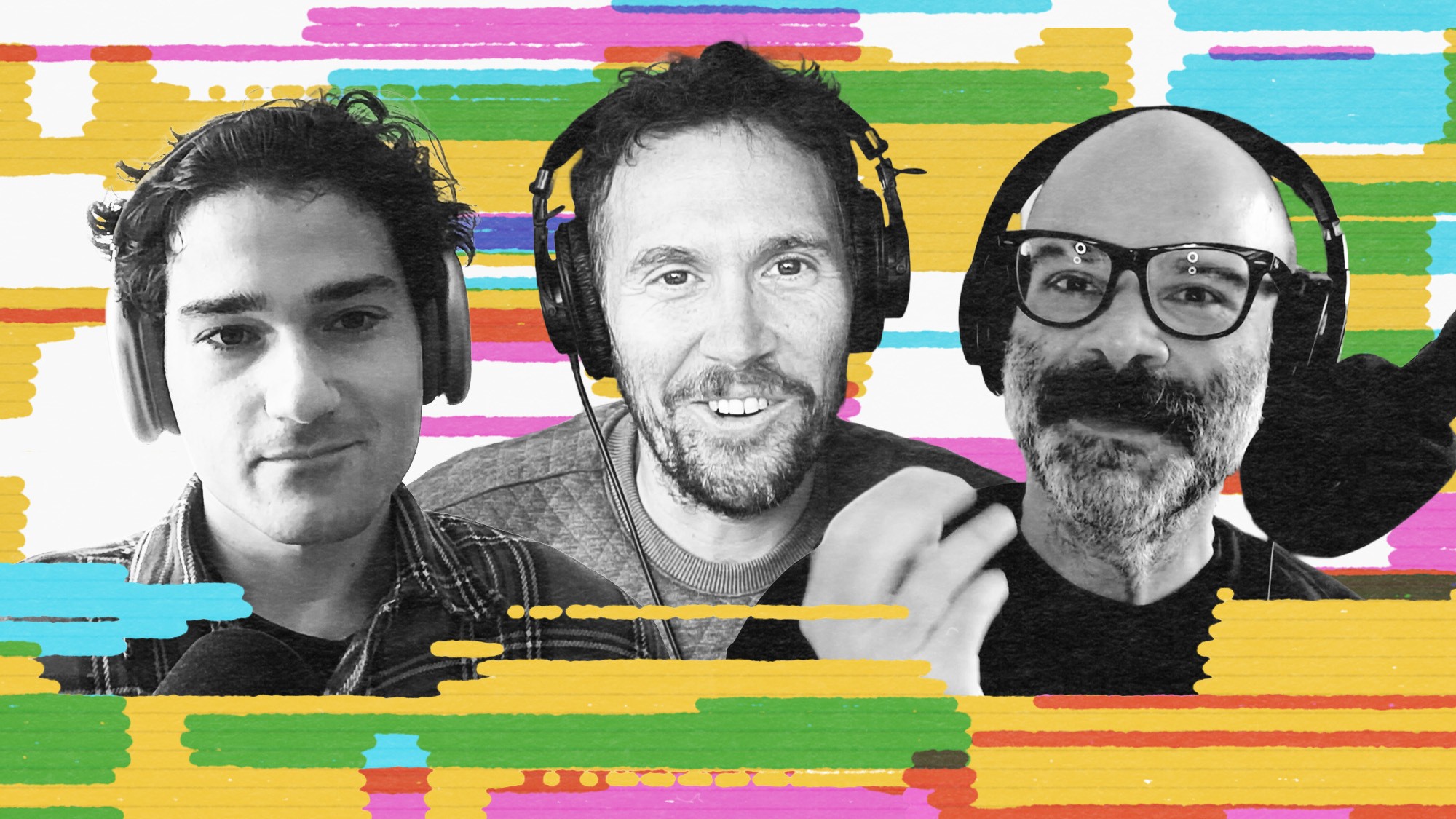
Subscribe here: Apple Podcasts | Spotify | YouTube
Visit livefromquarantine.club for more information.
Data centers, megadonors, and corruption had a bad Election Night. Prediction markets did just fine, but were a bit overhyped. So will the midterm results change how tech leaders move forward? What will a Democratic Congress mean for their businesses? In this episode, Charlie Warzel gets into what this election changes for the tech world, how voters saw through AI ads and billionaire donors, and whether we’re moving into a post–Elon Musk political era.
The following is a transcript of the episode:
Mike Isaac: I feel like there’s such intense pushback on the data centers specifically. And this is not a new idea, but like it really is this physical manifestation of economic insecurity; that fighting against AI in the ether is much harder to do. But if you’re like, No, this is a giant cube that I hate, that is in my backyard, that represents my doom ultimately—yeah, that’s kind of a layup in a lot of ways, you know?
Charlie Warzel: It’s just a national pain sponge, right?
Warzel: I’m Charlie Warzel, and this is Galaxy Brain. You may have noticed there was an election on Tuesday night. Democrats won big, Elon Musk lost big. Millions of dollars flooded into prediction markets. People across the country cast ballots on data-center initiatives, and they told surveyors and exit polls how they felt about megadonors, corruption, and artificial intelligence.
One of the big stories of the last few years is the way that many tech leaders and investors have aligned themselves with Donald Trump in his second term. It’s an issue that’s polarized Silicon Valley, and in very important ways, changed the trajectory of technologies like AI and crypto. And on Tuesday night, we learned a lot about how Americans feel about that realignment and about the influence that some of Silicon Valley’s richest people have in our politics. We also got a chance to see how AI, prediction markets, and tech money shaped or didn’t shape electoral outcomes.
And so today on Galaxy Brain, we are breaking down what the midterms meant for the tech world. Did prediction markets win the night? Was this the AI election? What happens next for Elon Musk, for the companies who bent the knee to Trump, for the AI labs? We’re taping this on Wednesday right after the midterms, and we’re going to be splitting this conversation up into two conversations. First, I’ll be talking with Mike Isaac, who has covered Silicon Valley for The New York Times for over a decade, and in December he’ll be writing about all of it for us here at The Atlantic. Then I’m going to talk about prediction markets with Will Gottsegen. He’s my colleague who writes the Over/Under newsletter for The Atlantic, which covers risk and prediction markets. Mike Isaac joins me to talk about it now.
[Music]
Warzel: Mike Isaac, my future colleague, welcome to Galaxy Brain.
Isaac: Thank you for having me.
Warzel: What was, in your mind, the biggest story of the night in tech?
Isaac: I mean, personally the biggest story was it feeling like 2014 Twitter vibes again to me. My favorite—this was just very funny culturally—was like, I saw this term come up: I’m not doomscrolling; I’m hopescrolling, a lot of people have been saying. Which is like, you know, obviously a huge wipeout for Republicans across the board, I think.
But as far as Techland goes, you know, there was a very clear referendum across I wanna say 40-something ballots—that data centers and this sort of inexorable trudge of AI into everyone’s towns is getting held up. You know, is getting pushed back by a lot of voters. And I think folks in the Valley, at least the ones that I’ve been talking to so far, have been kinda trying to reckon with that and say, Okay, how do we change our positions?
I think what they’ll do—I think what the companies will do—is be like, It’s a messaging issue. We’re not telling the right story. All they’ve heard from us has been doom and gloom. You know, certain companies are like, Dario Amodei over at Anthropic is really screwing us, because all he does is talk about how this is gonna destroy the world and take our jobs, but we need to do it.
And so my guess is that they’ll try to massage the messaging and say: Here’s, you know, drug discovery. Here’s ways that AI can improve the world. You need to learn how to have it augment your job rather than replace you entirely. But I think that, you know, it’s always gonna come back to that. Because fundamentally there are people who just think it’s not good for the world—developing this technology, certain versions of this technology, is not good for the world. And I think that doesn’t square with a lot of the worldviews among some camps in Silicon Valley who do think it’s just an unmitigated good, no matter how many rocky patches we go through. Like, how do you wrestle with that on a fundamental level, on a human level, when people are repudiating everything you’re trying to do, you know?
Warzel: I’m curious; there was some debate going into this, like, you know, This is gonna be the AI election. And then there was I believe our mutual friend Casey Newton argued in his newsletter Platformer last week that this would not be the AI election. And some of that was like, voter anxieties were—economic concerns were much more a factor than something like AI and data centers. Turns out maybe that wasn’t necessarily true.
But also I think what Casey was referring to is the idea that people were worried about a lot of AI deepfakes or, you know, potential misinformation. Or chatbots leading people to different canonical answers about who to vote for, or whatnot. And I’m just curious: In your mind, was this the “AI election”? How should we be framing that?
Isaac: That’s a really good point. So I do actually believe that people can care about what role AI has in society and not make it their platform issue, right? Like, I do think at the end of the day, a lot of voters were like, I care that gas is now three times what it was before and that I can’t afford groceries, and I’m not sure why we’re at war abroad with a country that I don’t think about in my daily life. Like I absolutely think those are pretty high on the priority list for a lot of voters who turned out. And so in that regard, I don’t think it’s necessarily the AI election, I think.
And it goes back to like: Okay, at the end of the day, I can’t afford to feed my family. I have this company or whatever sort of changing things in my community in a way that I don’t like, or I’m worried about. And I have folks maybe saying, like, “China’s gonna come get me,” or whatever. We’re gonna be, like, unprepared for the future—but I’m not as much worried about the future as I am just getting my day-to-day life sorted out, and trying to figure out how to put food on the table.
And so in that sense, I think it’s also not the AI election. Or at least I’m starting to give voters more credit as far as, you know, seeing through some of the “online is gonna control your minds” sort of stuff, in a way that I don’t think was as present, as maybe folks had been worried about, just a few years ago. If that makes sense.
Warzel: No, I think so. And I think you see it in the ways that propaganda and AI slop and all that kind of stuff has factored into this election. Like, it’s not moving people to believe, most of the time. There’s obviously always exceptions, but it’s not, most of the time, leading people to believe a reality that doesn’t exist. It seems to be a tool to augment the kind of political messaging that we’re always very used to, right? Like, crazy attack ads. I saw an analysis from the AI-detection company CopyLeaks that 47 percent of governor races published an AI-generated campaign ad of some kind in this cycle, right?
Isaac: Wow. Bring back human-centered oppo.
Warzel: But I think it speaks a little to—it’s like, yeah, this is just a way that we’re gonna illustrate a lot of this stuff, right? We’re gonna make people look bad in this way. And it’s not to say that it doesn’t matter, but that it’s sort of slotting into something that people are used to, and that people really know how to navigate, right? Like, people understand, I think—now this far into elections dominating the American psyche. You see a lot of attack ads, and you’re either sort of like, God, or you’re like, That’s interesting. I think you’re so right to just be giving voters and normal people a lot more credit for navigating this information environment in this cycle.
Isaac: I’m wondering, especially with some of the young-voter turnout, if we’re hitting this new generation of folks that can see through that much easier. And I’m also fearing the moment where I start getting duped by stuff and I’ve hit the cliff of my BS detective.
Warzel: It’s, well, the AI-agent stuff, and the spoofing. Like, I’m not so worried about it with politics. I am worried about it, you know, with my bank account. Speaking of money, I wanna talk about the money that poured into this. One of the obviously major stories of Tuesday night was that Elon Musk donated almost $500 million this election cycle, the single largest non-candidate donor in any election ever. A lot of that money went toward the Texas Senate race, where James Talarico drubbed Ken Paxton. And I am curious: What, in your mind, did Musk think he was buying?
Isaac: The more I’ve been thinking about this playing out, Musk has always been. And money in politics obviously is not a new thing. But it’s always been this thing of, like: Here comes the richest man in the world, and he can do what he wants, and he can throw all this money and everything. And I’m just wondering if part of this race was a referendum on it; like, is there political baggage being attached to him at this point?
Like, I don’t know how much the average person cares about Elon Musk. But I do think that, you know, getting blitzed with ads for a candidate who was, in Paxton’s case, very unpopular to begin with in Texas, and seen as a risk for Trump to throw weight behind him, instead of [John] Cornyn was like a real interesting moment on, you know: Is money just gonna work here? Can you just use those millions of dollars and push this candidate?
I think it’s very clear that didn’t work, obviously. And now Musk is in a real sticky situation on what his businesses are gonna look like in Texas.
But do you think that being attached to Musk, does that change in this new environment? Like, it makes me wonder about, kind of how being attached to Trump. And, you know, even now the coverage is shifting from Are we in a post-Trump world, or whatever? Are we moving to a post-Musk era of politics? If that makes sense?
Warzel: Well, I think that, unfortunately for Musk, he really represented every single faction that on Tuesday night America said that they were tired of, right? Like, he is an oligarch. He’s one of the—he’s the richest man in the world. He is in the business of AI, but also explicitly building data centers in communities, including historically Black communities. He is totally aligned with the MAGA movement, obviously, and with DOGE and all that stuff. It’s all rolled into one person, right?
And so I do think, in some ways, even like it was just tailor-made that it was gonna be a little bit of a referendum on him, or you can see how easily that worked.
And obviously, you know Talarico and others made this election in a lot of ways about someone buying it, right? About either Musk or other megadonors buying that election. And so I think that was very interesting.
To your other point, I wanna get to that in a second, but the way that I was kind of thinking about what he was also trying to buy, though, is: I think he is always like he is a master storyteller, right? And I think that the way that you see that, you know, with SpaceX, with Tesla, he builds things that are consequential and that matter.
But he’s also somebody—like when you look at all of Elon Musk’s companies, the price-to-earnings ratio is different than a lot of regular companies that build things in the real world. Meaning that the market values them a lot more than their revenues suggest the market should value them, because of the stories that Elon Musk tells. And I kind of think that spending that money, the ways that he has in these last two elections—being the largest donor, being just very clear about that—I think in a way, it rhymes a little bit, right? It tells a story, win or lose, about Elon Musk as this person who can drop half a billion dollars and have that loss made up in, you know, 45 seconds of SpaceX trading on the stock exchange.
And I think that there is just something of, like—it adds to the myth of Elon Musk in this way. It makes him central. Like, there’s no reason we should be talking about him in this election. He’s the CEO of a bunch of companies. And yet. He is one of the headlining stories because of all of that.
Isaac: He does kinda have main-character energy all the time, right? It seems like he likes that. He always likes redirecting the spotlight toward himself. In some ways, might become a liability in some of this stuff. I don’t know.
Warzel: I think that is what is gonna be really interesting here, because Musk, with all this, did ingratiate himself to this movement, right? He’s in a way, maybe not single-handedly, but independently, kept some of these campaigns afloat, kept them from totally crashing to the ground. And it’s an odd thing, because he has further yoked himself to this movement that now feels no longer ascendant. But also at the same time I don’t know that they can just turn their back on him. He does seem to be like a real chance for them. I’m not sure. I mean, do you get the sense that everyone’s gonna drop Musk like a bad habit after all of this?
Isaac: You know, it’s really the way—as you’re talking about this, I do think there are parallels to reckoning with the role of Trump in the Republican Party and the role of Musk in the Republican Party, right? And I think there was—because Trump has remade the party in his image for the past decade, and now voters seem to say there are limits to that, I think the GOP has to really reckon with what that means, and what that looks like for campaigning in the future.
I really think there’s probably gonna be a similar sort of thinking about what that means with Musk, and attaching yourself to Musk, for a number of candidates. I don’t think that means “drop it like a bad habit.” I think at least not for everyone, you know. But I feel like there’s gonna be at least a little bit of backpedaling in a way that doesn’t completely alienate oneself from Elon’s dollars, which are, as you said, pretty important in a lot of ways.
So I just feel like this period is gonna be such a struggle, too, for both the candidates and the CEOs at some of these companies, beyond Musk, trying to figure out: What is our next move? And really, our next talking points?
[Music]
Warzel: I was interested in your read on a tweet that Sam Altman put out last night, where he wrote: “People should always be in control of the future. OpenAI is against the notion that it would be acceptable for people to be relegated to a role of doing things that ‘AI systems think makes sense to rewarding humans.’ People should not cede control of the future to superintelligence.”
It sounds a little, Yep. I understand now we’re gonna be maybe regulated in some way or that there will be some constraints to us. I’m curious of your read on that, and if that felt to you like an acknowledgement that things were maybe gonna have to change a little bit.
Isaac: Yeah, I mean, it was funny. That’s like the only big CEO that I’ve seen really say anything even remotely a little bit political, so far. The only other thing was Musk deleting his “go vote for red” tweets, which was kind of funny. But I hope everyone didn’t see it.
But I do think it sets up an interesting dynamic. Right now, OpenAI and Altman are staring very hard at Anthropic, on the eve of their IPO in the next couple of weeks. And their strategy has really been to paint themselves as a foil to Dario Amodei and Anthropic being the bad guys here, and sort of trying to cast themselves as the sane ones, where Dario is this doomer who thinks, you know, AI is gonna kill us all. And lead the charge, and only they are the ones that can harness it. Because it is inevitable.
It wasn’t that long ago that Sam was talking about these things in a very similar way. But I do think if you’re the CEO of an AI company and you see a pretty strong repudiation of, you know, AI-data-center building across the board, you have to start talking in a way where it’s like, Actually we’re the good AI company, and we want to give you control. And it’s these other guys that are trying to push this stuff down your throat. And also, you know, Dario is kind of hamstrung in what he can say, because they’re in this quiet period before the IPO. So it’s just like, I really admire how ruthless OpenAI is at every turn on their messaging, especially when they’re trying to go after. It reminds me a lot of [Mark] Zuckerberg too. They just—Anthropic is the punching bag of the day, and that’s how I read a lot of their statements these days.
Warzel: I’m curious where you think we’re headed here. And so I saw some people posting about, you know, There’s gonna be televised trials of big tech executives, and things like this. And Senator Ed Markey posted on X last night: “They are going to need to plant new forests for all the subpoenas we’ll be printing.” Which is, you know, kind of intense.
Isaac: Wow. My God. Yeah.
Warzel: Definitely signals a real, almost frothing desire to, you know, make an example out of some of these people. Obviously with Musk and DOGE and all these things, there could be that bringing him to bear; investigating his companies in some way. But I am curious with this. If you think there is—A) what you think could potentially happen. But B) I see this a little bit, and also worry that there could be an overplaying of the hand, like very quickly. So I am curious what you think might happen. And also if you feel any of this, you know, concern about maybe even just like re-radicalizing them again, and just this ping-ponging cycle of techlash, embrace, techlash, embrace.
Isaac: Yeah, I mean, I do think accountability often can play well in these moments. Especially when a lot of folks have felt helpless at a president who’s been very, you know, very willing to sort of push through his agenda, and the agenda of like a large vocal faction of his party. Like, I’m not fully convinced that just being a full anti-tech platform is necessarily a winning platform across the board immediately. Just because I do think it’s an issue for many, but it’s not the primary issue.
But that doesn’t mean, you know, don’t do anything, or don’t like have investigations that they feel they need to have. I think those are probably gonna go on. But I think there’s gonna be some senators and some representatives who are very fixated on this, who are gonna ask—you know, have investigations into what went down in DOGE. And is there real accountability here? Like, I think that’s a real thing.
But I still think, at the end of the day, people are just very upset with the economy and their ability to exist and function in the United States as a family that, you know, can work and afford to feed and clothe themselves. And so—does that mean no reining in of unlimited tech power? Or like, these CEOs just going to Washington and getting a rubber stamp on whatever they’re trying to do? No; I think there’s gonna be real questions around whether that was a good thing or whether that should continue. And that is the prerogative of folks in different places.
I guess the other thing I would say is: The reason I feel like there’s such intense pushback on the data centers specifically is—and this is not a new idea—but like it really is this physical manifestation of economic insecurity; that fighting against AI in the ether is much harder to do. But if you’re like, No, this is a giant cube that I hate, that is in my backyard, that represents my doom ultimately—yeah, that’s kind of a layup in a lot of ways, you know?
Warzel: Yeah. I’ve thought about it as just—it’s a national pain sponge, right? You could just direct all of your frustrations to it. But also I think, very truly, not only is it the physical manifestation and the cube of doom in your town, but it’s also: You can go to a meeting and yell at somebody about it, and then they will maybe, you know, pull the contract or do whatever, right? Whereas we have seen you can yell a lot at any of the tech executives, and it’s probably not often gonna do a whole heck of a lot.
Isaac: That’s right. Yeah. They go to Congress, and they take their drubbing and the viral social-media clips come out of it. With Zuckerberg, you know, looking like he got called into the principal’s office. And then they go home and do whatever they want, basically. And I think that’s far less satisfying to the average person than going to your town hall and saying directly to someone, We don’t want this, and them having to listen to you, basically.
Warzel: So I wanna end by doing the absolutely most annoying media thing. Which is: An election just happened, and then we’re gonna talk about the next one that is legitimately two years away.
Isaac: God.
Warzel: And I’m only curious though, from the idea that, you know, OpenAI is doing some—OpenAI’s top lobbyist, Chris Lehane, is doing some lobbying right now, telling prospective 2028 candidates that artificial intelligence is going to define their bids for the White House. You’re seeing that posturing.
Do you think that AI is going to be a much bigger deal? Like, we have in this conversation gone back numerous times, in a way that I think’s super important, that the economy, affordability, these basic issues of being able to live are like the core things. And all these other things bubble up around them, and, you know, impact the way that people vote and they talk about it. But I am curious: We’re on this trajectory with artificial intelligence, where it’s just moving faster and faster, having more and more consequential stakes in our lives. How are you thinking about the role it might play in 2028?
Isaac: I mean, look; I think you can tie it to exactly the things we keep returning to. Which is if you believe that this is the trajectory, then these two are on a collision course. It’s going to reshape the—I mean, it already has reshaped our economy in a lot of ways. And the way that you’ve talked about it with the stock market, and basically how the entire stock market and our retirement funds are propped up on the strength of big tech and data-center buildout and a large swathes of employment. So I think that is certainly a key issue, and that’s unavoidable in a lot of ways.
The thing that always kinda drives me insane around AI discussions that a lot of folks, a lot of prominent commentators, frame it is just sort of this air of inevitability that I just don’t subscribe to. I think this is—let’s say an election is actually the best way to look at that. Which is like: People have agency, and they have choices to what things are gonna be a part of their lives, and how we are deciding what to build or what not to build, you know? And I think now, as let’s say existential risks or at least safety—if not going as far as to wipe out humanity, but let’s say, like, cybersecurity problems or bioterrorism questions.
As this becomes a more mainstream discussion, I think people are gonna actually have opinions on it and what they want—rather than sit back and be told by the influencer of the week that: This is coming; you have to prepare for it no matter what.
And I think that’s an empowering message. I think you can talk to people like human beings and say, You should have a seat at the table and decide: Do you want this to be a part of our lives or not? You know?
And where I’ll come to common ground with tech executives here is that messaging may be an issue here. Because I do think people should learn about it and understand it, as they decide whether or not they wanna, you know, push back on it. But I think that’s a good thing. To end on, like, a corny note, that’s part of a healthy democracy. And so maybe we’ll get there in the next election.
Warzel: It’s also an opportunity, I think, right? Like, I saw Derek Thompson talking about this today—this idea that if you are anti–any regulation whatsoever, and you are investing in a way that is reckless, or that could lead to a bubble that pops and dramatically crashes the stock market and, you know, has all these super-negative effects in the world, and also on the development of the technology? That’s bad if you’re these technology companies.
If you build it responsibly, with some meaningful consensus of, you know, the constituents of the world or your country or whatever, and you build it in such a way that if a bubble pops a little bit, there’s not as much economic fallout—and people don’t get hurt and then aren’t totally negatively polarized against you? That’s good for the technology.
So to kind of close it out—there’s an opportunity here, I think, for these companies if they want to see it. If they want to do that, as you said, that self-reflection, and that building the consensus around something that all of us are going to have to use and live with and have it affect our lives. So.
Isaac: “Self-Aware Tech CEOs 2028?” That’s my headline.
Warzel: It’s a big question mark. Mike, this is a delight. Thank you for coming on Galaxy Brain and hashing it out with all of us.
Isaac: It’s an honor to be here. I can’t wait to be your colleague very soon.
Warzel: First of many. Sweet.
[Break]
Warzel: Will, welcome to Galaxy Brain.
Will Gottsegen: Thanks for having me, Charlie.
Warzel: I’ve seen a lot of postmortems in the past few hours coming out here saying that prediction markets won the night. Is that framing feeling true to you, or is that overstated?
Gottsegen: Yeah; I would say it’s overstated. I don’t love that framing for a few reasons. The first reason is that it’s not clear to me what these markets are bringing to the table that’s not already out there, right, in the ether.
I think one of the original ideas behind prediction markets is that they sort of surface the wisdom of the crowd. People in the world go out and they see what’s around them, and they bring that information to the market. And then they make bets on that information. And it informs, you know, the ultimate probability that these platforms put out there. I think we saw that in many of these races, people seem to be sort of making bets on the polls, right—other election forecasts, things they saw on late-night TV broadcasts.
It’s hard to know exactly what goes into the predictions that traders are making, but it’s not always clear to me that in every race they’re bringing something new to the table. And so in that way, it’s not clear to me that the night was a huge win for prediction markets. I also think it’s important to remember, you know, these are sort of just sports-betting platforms with prediction markets. Like, they’re sports-betting platforms with politics functions kind of slapped on. These are a small portion of the total volume.
I mean, it’s true of both Kalshi and Polymarket. Sports is really, and parlays and crypto—these are sort of where the action is. And last night didn’t change that, really. I mean, we saw a huge sort of marketing campaign around these platforms’ ability to properly forecast elections. We saw billboards go up. We saw massive, like—blockbuster ad campaigns, videos. But it’s not clear to me, yeah, that the calculus has changed that much for the people who are actually using these platforms and making money on them, or not making money on them.
Warzel: That’s an interesting thing—about them being sports-betting platforms with politics kind of tacked on. Because I’ve heard it argued that elections should be the best proof of concept for prediction markets, right? ’Cause there’s lots of time for these narratives to develop; lots of data in terms of pretty consistent polling and things happening in the news. There are these big events, and the markets theoretically should be pretty liquid. Meaning that there’s a lot of trading volume in them, a lot of money going into them. Are they the best test, you think, for the efficacy of a prediction market? Or is this really just, as you say, sports betting with a political veneer?
Gottsegen: I think it’s just like—what do you want your betting platform to be? What do you want it to do for you? You know what I mean? Like, I think that it’s important narratively for these companies that election forecasts work as they’re expected to. And I think there’s a lot of evidence that they do kind of work as they’re expected to, right? Like, especially when you have a lot of volume. I think in lower-volume situations you can get sort of these whiffs of manipulation, right?
Like, it’s not to say they’re rigged. They’re not rigged. But it’s like you can have a smaller bet, a smaller amount of money that moves the market more—just because there’s not a lot of, you know, money sloshing around in the market. But when you’ve got a lot of volume, these things do kinda work as they’re expected to.
The problem is that narratively, if you’re these companies, you have to convince the regulators, many of which are against you. You have to convince the American people—many of which are against you or skeptical of you—that you’re doing something for them that is more than just speculation. And so election forecasts are important for that narrative in some ways. You know, they have—these platforms have other ways of trying to make that point, too. But elections are part of that.
And like I said, right, the volume situation hasn’t totally changed. People do use these platforms for speculation. They do also use them for other reasons, but the proportion between those two things is just really wildly out of whack.
Warzel: What is your sense as to whether this legitimized the prediction markets? Whether it did what they needed—which is give them that veneer of utility as, you know, not just a speculative market?
Gottsegen: I do think it’s too soon to tell. But I also think that if it had gone the other way, right, and Republicans had staged a comeback, or if there were really prominent races where people were like, “Wow, the prediction markets really missed.” There were a couple races where, you know, the favorite didn’t win. But if there was no blue wave, say, I think we would’ve seen some major pushback in terms of the credibility and the reputation of these platforms.
’Cause sort of like I was saying, I mean—most Americans are opposed to betting on elections. You know, these markets need to be markets, really. They can’t just be sort of like pure information harvesters. But yeah—it’s not clear to me whether that’s gonna go away based on last night.
Warzel: Well, it’s also interesting too, because in some ways you could interpret this election as a bit of a referendum on some of this corruption—on some of this feeling that markets are out of control. That, you know, people are betting on everything. The insider-trading idea and the prediction markets, you know, kind of—I don’t know. It feels interesting to me, in that sense that this could be a good night for them. But also, it does seem like people are starting to get kind of tired of the hollow speculative feeling. When CNN announced its partnership with Kalshi. And anecdotally, it felt like I kept hearing about these prediction markets, you know, integrating themselves, intertwining themselves in with media systems, both traditional and not.
I spent some time watching some of these Election Night broadcasts. Didn’t really see a ton of that integration, or as much as I expected. I didn’t see, like, the Kalshi big board on CNN. It was a lot of John King just doing, you know, what he normally does, which is look at the results as they come in.
I also didn’t feel like it was a dominant factor. It kind of felt like we put prediction markets on this pedestal, right? We talk about them a lot. And then when the rubber meets the road, when the returns are coming in, it sort of felt like: Okay, now it’s time for, you know, the adults to step up. Like, Decision Desk, AP. Like—the people who call the shots. Did that feel like an accurate description of what you saw?
Gottsegen: Totally. I think, like, another thing I’d add to that is that these markets—they’re built to resolve after a certain outcome happens in the world. And with a lot of these elections, that outcome was basically when the networks called it. So there were cases where the markets, you know, would basically home in on a 99 percent probability of a candidate winning. But then there’d be a couple more hours of trading. Like, in other words—the prediction markets sort of called it early. I mean, even on their social media they would call it early.
But at the end of the day, the thing that stopped the trading was the networks calling it. So there’s a way in which they’re still relying on the old system. You know, the incumbents aren’t gone in the way that some of these firms might like them to be. There’s been a narrative that prediction markets are better than polls. I mean, they’re not polls, so they’re kind of apples to oranges in that regard.
But yeah, I would also say, like—some of this is probably just, like, inertia, right? Like, these are weird tools. These are weird phenomena. I mean, people aren’t ready in some ways to accept them as a part of Election Night.
I mean, Kalshi had midterms watch parties. Polymarket had a midterms stream that was going on. But I think for most people, they’re not necessarily tuning into these in the way that maybe finance people are starting to.
Warzel: I have a question about the logistics of this, which is if everyone bet on the conventional wisdom, right? Democrats were gonna have a pretty good night. The prediction markets are showing that, because people are betting that way. It’s the way that the polls are looking. And then it worked out, roughly speaking, across the board.
Did these companies lose a lot of money? Like, help me understand how this works on a very basic level—if this is good business for them if, you know, they kinda go chalk on the predictions and everything works out exactly the way it’s supposed to be.
Gottsegen: Sure. I would say that, you know, the way these platforms make money is trading fees, in large part. And the more trades you get, the more fees they’re raking in. So in some ways, volume is king in this regard. And that’s why a lot of the revenue here comes from sports.
Like I said, this didn’t really move the needle. I mean, there was an uptick in volume, clearly. But when it comes to the bottom line for these platforms, sports is where it’s at. And I’m not gonna say it’s de minimis politics, but it’s certainly a very small piece of the pie. So it’s hard to say that, you know, they were either gonna make or lose a lot of money from one night in this case.
Warzel: Was there anything that unfolded over the last couple of days, and especially on Election Night, that surprised you? You’ve been covering this, anticipating this moment. Was there anything that stood out or shocked you?
Gottsegen: I think what shocked me, if anything shocked me about this, I think it’s sort of a corollary to what you were saying earlier, right? We have known that these platforms have been gunning to be these accurate, unbiased sources of information. They’ve been making these big claims about the fact that they can call races early, the fact that they can aggregate all sorts of new information and bring it to market.
And like you said, I think there’s just not a sense that a lot of people are buying into this yet. I mean, certainly finance people are. Certainly people who are on the cutting edge of tech are into this stuff. But there’s such a skepticism. I mean, even anecdotally, from people in my life. I tell them, like, I was watching the Kalshi midterm stuff all night, and they’re like—they just raise an eyebrow. Like you said, I think there might be a reason that this stuff has almost been downplayed on cable news. It’s just, like, not something that people are ready for yet, in certain ways.
I mean, in some ways they are, right? There’s “product-market fit.” Like, people love to bet on these platforms. But when it comes to elections, there’s an inherent weirdness there that I think people aren’t ready to grapple with.
Warzel: What did Tuesday’s results change, if anything, about how the platforms might be regulated or treated going forward by lawmakers?
Gottsegen: It’s a really good question. You know, I think the expectation broadly is that a lot of these sort of roughly ambiguous legal status of whether these things are “gambling.” Whether they are, as they say, prediction markets, whether they’re straight-up markets, right? Whether they’re—whether we’re trading swaps on these platforms or not.
I think a lot of that has the potential to be decided in a Supreme Court case. And so until then, you’re gonna see a little bit of what’s been going on already. There’s sort of a patchwork of state regulations that have been pretty loosely applied to these companies. And I think, just sort of like I was saying earlier, the more Dems you have that are sort of opposed to these platforms in theory, maybe you’re gonna get some more hostile regulation.
Warzel: I think that we are living in this, as we talked about, this very interesting space where prediction markets got the blue wave—the blue tsunami, whatever you wanna call it—correct.
And as a result, they are now much more open to potential regulation or slaps on the wrist. Or, you know, simply just an askance eye from the Congress that they helped predict is gonna come into session. I think that alone is a weirdness and a really interesting wrinkle to this whole phenomenon.
Gottsegen: Yeah. It’s sort of—you know, they were rooting for this outcome, because that’s what bettors were forecasting. And if they won, it would sort of help lend credence to this idea that Polymarket and Kalshi are good election forecasters. But right—like you’re saying, there is a potential downside to this on the regulatory side.
Warzel: I think that’s a great place to leave it. Will, thank you so much for joining Galaxy Brain. Thank you for your service in tracking all this, and we will continue to follow along with Over/Under. Thank you.
That’s it for us here. Thank you to my guests, Will and Mike. If you liked what you saw here, new episodes of Galaxy Brain drop every Friday. You can subscribe on The Atlantic’s YouTube page or on Apple or Spotify or wherever you get your podcasts. And if you want to support this work and the work of my fellow colleagues, you can subscribe to the publication at TheAtlantic.com/Listener. That’s TheAtlantic.com/Listener. Thanks so much, and I’ll see you on the internet.
Learn more about your ad choices. Visit podcastchoices.com/adchoices