The Real Lesson of the Jensen Huang Scandal
· The Atlantic
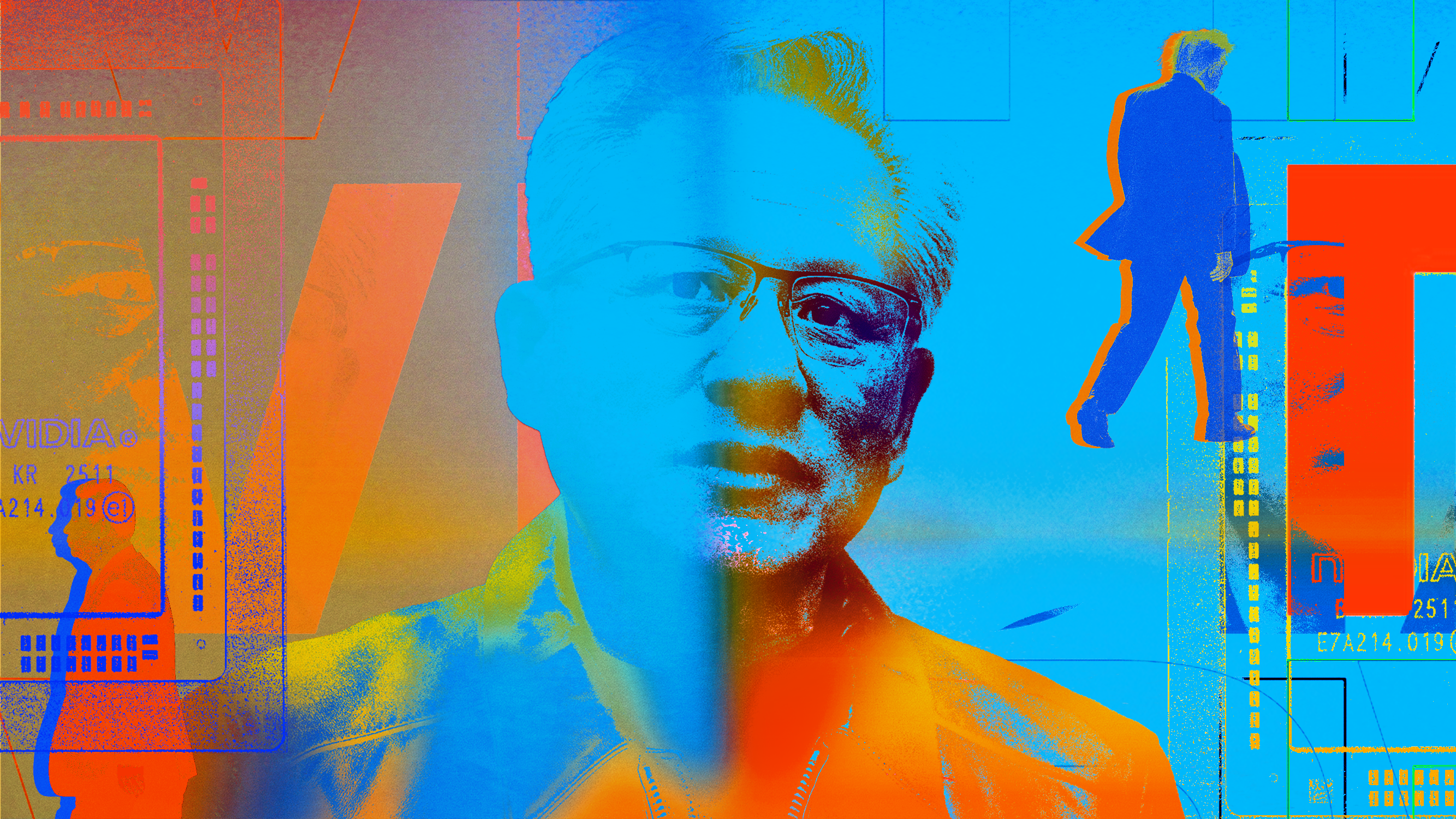
Although the full Nvidia story is still emerging, the most alarming revelation may not be that Jensen Huang, America’s most influential AI executive, was involved with a suspected Chinese spy. It may be that senior administration officials were warned about the danger and nevertheless continued relying on him to guide the United States’ technological future. American strategy has come to depend, to an extraordinary degree, on powerful private-sector actors whose incentives the government cannot simply assume will align with the national interest.
Visit afsport.lat for more information.
In May 2025, Huang was photographed dining in Taipei with Alice Huang, the alleged Chinese Ministry of State Security asset with whom he had a romantic relationship. This past May, President Trump flew to Beijing to meet with Chinese President Xi Jinping. In flight, Secretary of State Marco Rubio reportedly briefed Trump on the intelligence. But that shocking information did not stop Trump from bringing Jensen Huang on the trip or treating him as a key adviser.
At a refueling stop in Alaska, Huang rendezvoused with the delegation. He chatted with Elon Musk in a cabin usually occupied by the president’s senior aides. On the table in front of Huang sat the White House–branded chocolates given out to guests: Hershey’s Kisses. When the group arrived in Beijing, Huang emerged from the plane to walk the red carpet alongside Trump, Rubio, and other top officials, a powerful symbol of Huang’s closeness to the president and his influence on the administration’s China and AI policy.


[Read: A scandal at the center of the economy]
Trump’s instinct was to stand by his man. The revelations did not shake the president’s apparent conviction that Nvidia’s leader was indispensable. But as of this writing, the Wall Street Journal has reported that the Nvidia board may be preparing to oust Huang. The administration is facing major questions about its handling of the issue: Bloomberg has reported that in late summer 2025, Nvidia’s general counsel contacted senior Commerce Department officials about the company’s investigation into Megaspeed, and lower-level Commerce employees faced unusual restrictions on how they could pursue inquiries involving Nvidia. Asked on Sunday whether he should have acted on the warning, Trump replied, “No, I don’t think so.”
Huang is what we might call a “double dove.” He famously said the “China hawk” label was a “badge of shame.” When the CNN anchor Fareed Zakaria asked Huang if it matters whether the United States or China wins the AI race, he said, “I don’t think it does.” Similarly, Huang dismisses warnings about catastrophic AI risks. These views contrast with those of Anthropic’s Dario Amodei, who is a “double hawk,” seeing China as a crucial national-security threat and warning that AI could pose an existential risk to humanity.
Both men insist that their positions reflect their understanding of American national interests and AI’s future. But their disagreements also align with their commercial interests. Nvidia profits from selling chips to as many customers globally as it can, and Huang has lobbied against American restrictions on the sale of advanced AI chips to China. By contrast, Anthropic benefits from keeping Chinese firms as far behind the frontier as possible. Ironically, the two men’s businesses are intertwined. Anthropic, like many other leading AI developers, uses Nvidia chips.
The AI race is generally understood as a competition among firms and between nations, but it is also a battle of ideas. At its center is what I have called the dream of “AI primacy”: the conviction that advanced AI could give the United States a permanent advantage over its rivals, restoring an era of unchallengeable American dominance. But that vision depends on the questionable assumption that technological power accumulated by American companies can be reliably converted into power exercised by the American government.
American and Chinese leaders speak of two rival technological systems, but those systems are in fact not entirely separate. They are interdependent, entangled through the movement of technology, capital, information, and people. Beijing has officially refused to import the large quantities of Nvidia chips that the Trump administration has approved for sale—but Megaspeed and similar companies operate on a business model that demonstrates how reliant Chinese AI firms remain on computing power from abroad. Some use data centers in Southeast Asia to get around U.S. restrictions. Silicon Valley executives, for their part, talk of a zero-sum race between America and China even as American AI companies rely on talent from China. These interdependencies create economic opportunities but also avenues for espionage, coercion, and manipulation. And the more the AI race depends on sprawling networks of companies, customers, and governments, the more influence accrues to the handful of individuals who sit at their intersection.
[Rogé Karma: Democrats have no coherent plan for AI]
Technological supremacy and national power do not always pull in the same direction. A remarkably small circle of executives and officials make the decisions that will shape AI’s future and the geopolitical competition around it. The power of these individuals is fast escaping the reach of the institutions responsible for guarding against technological and geopolitical risks. The Information suggests that Alice Huang exploited her access to Jensen Huang to help Chinese companies obtain billions of dollars’ worth of Nvidia chips. Meanwhile, the Commerce Department reportedly delayed action against Megaspeed, even as other agencies pressed for restrictions. Axios reported that Treasury Secretary Scott Bessent confronted Commerce Secretary Howard Lutnick last week about why Megaspeed had not been added to a government list of restricted entities, following months of interagency warnings about the company.
The unanswered questions now extend well beyond the affair itself: Did the relationship influence Nvidia’s commercial decisions, causing the company to allocate products to Megaspeed rather than American firms? Did Nvidia’s political influence compromise the government’s ability to enforce its own rules?
Some leaders of the AI race speak as though their inventions will allow humanity to transcend its limitations—and perhaps give one country power over all others. Yet the people guiding this transformation remain vulnerable to the oldest weaknesses of human nature: ambition, vanity, fear, greed, desire. The era they are making is defined by the collision between superhuman ambitions and human frailty.
The lesson of this scandal is not simply that these people are fallible. It is that we need institutions capable of checking their influence and managing the consequences of their mistakes before these individuals become too powerful to be held accountable.
*Illustration image sources: Joel Saget / AFP / Getty; Feng Li / Getty; Finn Gomez / Getty; Sean Gallup/Getty.