<em>Zelda</em>’s Midlife Crisis
· The Atlantic
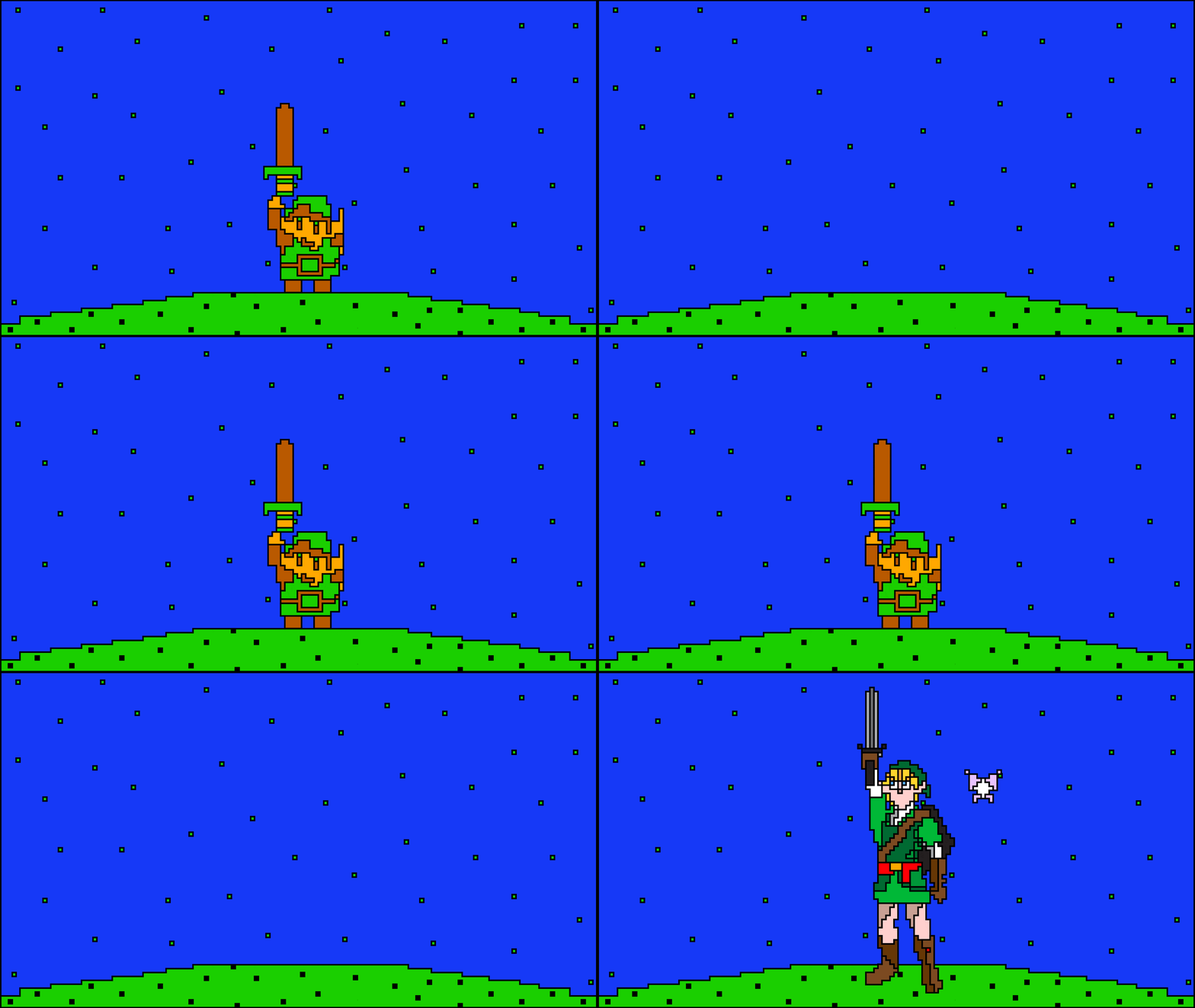
Many video games have reached middle age. Pong did in 2012, Space Invaders in 2018, Pac-Man in 2020. Depending on how nerdy you want to get about provenance, Mario turned 40 in 2021 or 2023 or 2025, and Oregon Trail hit the milestone in 2011 or 2025. Video games, a medium for children that has tried and mostly failed to become sophisticated entertainment for adults, are simply old. The Legend of Zelda, which turned 40 this year, is the latest release at the codger arcade.
Visit sport-tr.bet for more information.
I am, alas, even older than that. My first encounter with Zelda took place at arm’s length. I had seen the strange television ads for the game, because that is how toys and candy were marketed to children. Despite owning a Nintendo Entertainment System, I felt no pull to play or own the game. It seems idiotic to assert that a fantasy-adventure video game with an elfin boy clad in green struck me as childish, but I could already feel adolescence pulling me from Mario to, well, Maria or her equivalent (who was probably named Jennifer or Heather or Michelle).
I vividly remember a conversation with my friend Peter about the game, shortly after its U.S. release in 1987. “Do you ever get tired of Andrew and Peter talking about The Legend of Zelda?” I asked him (I had two friends named Peter). I already knew the answer, but the question was meant to produce a kinship in experimental scorn at the childishness we aspired to move beyond. “God, yes,” he replied, or something along those lines. Andrew and the other Peter talked about it constantly. Traversing the Lost Woods, finding the raft.
[Peter Sagal: The Last of Us and the power of video games]
But The Legend of Zelda eventually pulled me in anyway. A year or so later—an eternity in preteen terms—I took turns piloting Link, the game’s hero, at my cooler friend Nathan’s house while his wiener dog, Leonard, meandered across the carpet. Nathan had already developed distinctively teenage tastes, chiefly Powell Peralta skateboards and their associated Bones Brigade pro-skater stars, among them Tony Hawk and Lance Mountain. Leonard reeked, and Nathan was starting to smell bad as well, another mark of boyhood’s end.
Last week, Nintendo released a remake of The Legend of Zelda: The Ocarina of Time, a 1998 title widely regarded as one of the finest games among the many iterations in the series. The new edition has already sold more than 5 million copies. “Gamers” did not yet exist when I first played the original Zelda, but in retrospect, by the late 1980s it was certain that they would. I didn’t have the language or foresight to articulate this at the time, but a worry about the prospect was already brewing in my brain. The power of video games was clear, but so was their danger: a world to occupy beyond the real one. What I didn’t realize on Nathan’s floor with Link and Leonard, about to leave childhood behind, was that in the decades to follow, video games would become a place to reproduce that childhood, forever. We would grow up, but video games such as Zelda, no matter how old they became, never would.
Zelda confused me. Previous video games had offered direction. Mario and Luigi moved ever rightward, toppling Goombas and leaping over chasms. An Oregon Trail party progressed west through dysentery and Wyoming. Even the meandering paths of Zork, Atari’s Adventure, and The Bard’s Tale had offered clear direction on what to do next. When it was my turn at Zelda, I found myself perplexed by all of the options. I took the same path every time, dying prematurely at the hands of Wizzrobes (because I did not possess the Magical Shield that could repel their energy beams, dorky knowledge that risked transforming me into Andrew or the other Peter). After a few rounds of this, I sought advice. “Where should I go?” I asked Nathan. “Just wander around; that’s what most people do,” he replied, his words dripping with contempt.
Cowed, I bought the game—which came on a shimmering, gold-colored cartridge to which it could save progress directly, a first—to overcome my apparent inability to understand it.
This idea, that a video game could facilitate exploration in a simulated world bigger than the challenges choreographed inside it, is now so familiar that it counts as cliché. But at the time, it was startling. Popular culture—even Star Wars—was not yet understood by its consumers as world building, a now-popular name for constructing a fictional universe and then situating characters and stories inside it. Tolkien had been popular for decades, of course, but high fantasy was still largely considered escapist and—apologies—somewhat cringeworthy. To obsess about a false world real enough to imagine occupying remained strange, a fixation of dweebs unable or unwilling to live in the real one.
Video games were not worlds that players lived inside, but supremely strange diversions. Bubble Bobble, Dig-Dug, or even Super Mario Bros. were bizarre and freakish. They felt like alien entertainment abandoned in the shadows of convenience-store entryways, bowling-alley hallways, ratty arcades, midway-twinged pizza parlors, or dank home dens. We held the practice at an accompanying remove. Playing games had not become an identity, like heavy-metal music or skateboarding—instead, it was an occasional activity, akin to playing miniature golf or taking snapshots.
Ocarina was originally made for the Nintendo 64, from the first generation of consoles that supported 3-D graphics and the large, explorable worlds they made possible. When I got one in 1998, I recognized the software as childish—it was made for children—but found the N64 novel thanks to the exploration it facilitated. What you did inside 3-D worlds was important, but most of the appeal came from simply inhabiting them.
[Read: Literature is becoming more like a video game]
When Ocarina of Time appeared later that year—28 years ago, I must emphasize—I was an adult with a job, and soon enough a wife and a child. Moving around a three-dimensional world was familiar—Doom was five years old at that point—but meandering through one that was a dozen years of formative lifetime removed proved novel. In 1986, Zelda’s universe was just a paper map in the box; now it was a place. Everything about the game mesmerized me, even as I recognized its fiction, dialogue, and characters to be infantile.
That childishness felt appropriate at the time. Link begins as a doe-eyed boy in an idyllic forest. To save the kingdom of Hyrule from the evil intentions of Ganondorf, Link collects sacred trinkets, which eventually allow him to transit between childhood and adulthood by means of a magical instrument and sword. The childhood Hyrule is somewhat unstable, thanks to the initial power of Ganondorf. But the Hyrule of adulthood amounts to a ruin. Grown-up Link can use weapons and tools that little Link cannot, among them a rock-crushing hammer and a horse named Epona, but these capacities are moderated by the hellscape he now occupies. The towns are riddled with zombies and monsters. The familiar and charming places Link explored as a boy have been corrupted.
It didn’t take much effort to decode this straightforward allegory: Youth is idyllic but powerless; adulthood is commanding yet derelict. Ocarina made the theme of temporality central to its story, and at a time in the evolution of games when the idea made sense. My peers, the first Nintendo generation, were now grown up.
Video games, too, seemed still capable of reaching an adulthood of their own. I tried my hand at contributing to the outcome. During the decades that followed, I embarked on a reasonably successful career as a video-game designer and theorist. My primary interest was how games could be nonfictional, a playable counterpart to books or documentary films. Influenced in part by the titles I had played as a kid, Oregon Trail among them, I argued in my scholarship and at my studio that games offer a way to make playable models about how the world works (or how it should). These ideas were influential and even modestly lucrative, but social media took computing in a very different direction, one focused on sound bites and simple answers. When it came to video games, Link and Nintendo of their Ocarina era were correct, though perhaps not in the way they had intended.
I sat down to play Ocarina of Time last week for the first time in nearly three decades. Early adulthood feels hazy to me now, and childhood mythological. The son who would be born the year after I first played it also bought the Ocarina remake for his Switch 2 console; he had to fit it in between preparing PowerPoint decks for work and embarking on corporate travel to display them. Technology has advanced immeasurably in the intervening time, and Hyrule looks lush and gorgeous by comparison to what I remember from the Nintendo 64 original. Sun and moonlight now glint across the dew of meadows; the castle town bustles with convincing crowds; Link’s native forest, now in tatters, evokes actual rather than fictional terror.
And yet, nothing has really changed in Ocarina’s Hyrule. Apart from appearance, the games are identical—at least insofar as I could discern or remember. Some puzzles frustrate me in a familiar manner. The dialogue remains juvenile in the same way it always was. Returning to a childhood home or even watching a once-favorite movie tends to reveal a mistaken impression about the past’s idyll or the present’s depravity.
When I first played the game, it felt evocative: Potential is innocent and righteous because everything is still possible. But then things happen, even good ones, and the present feels narrower than the past’s future did. My old friend Peter is now an oil-and-gas attorney; the other Peter is a urologist. I am whatever I am, which is a reasonably successful writer, or perhaps a historically relevant scholar of video games—a job that sounds like a joke in a Don DeLillo novel. These are good outcomes, but outcomes always close off other possibilities. Evil of the Sauron or Ganondorf sort is a misleading enemy to innocence; instead, that the future arrived at all is what’s heartbreaking.
This time, I was unable to learn anything new from Ocarina of Time. Its message appears to be simpler than the one I first perceived: Childhood is not merely innocent but righteous. All it needs is modernization through improved graphics and a translation to contemporary devices, the way a classic muscle car might be restored (perhaps by an old man seeking to recover an unexplored possibility of his younger self).
The game you remember being great is so anew because it is so again. By extension, you are also great because you are you, and you were young once, and you are playing a video game that you loved. Games became intricate and convincing worlds to occupy. The most appealing of those worlds does not simulate another one, real or fictional. It delivers, in detail greater than your own memory ever could, your own sensation of bygone comfort in having inhabited it before, when the potential of the past remained blissfully undetermined.