Brampton family hopes to raise $5.5M for tot's gene therapy treatment in U.S.
· Toronto Sun
See more Toronto Sun on Google — save as a Preferred Source
Visit moryak.biz for more information.
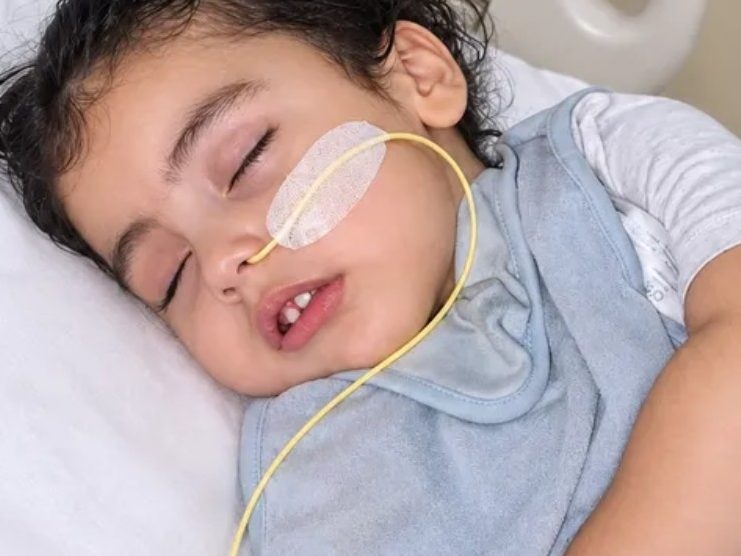
A Brampton man is appealing to the public for help funding an expensive gene therapy treatment that may save his young son’s life.
“To us, Zorawar, is not just a child living with a rare genetic disorder,” father Mandeep Chandi said on the GoFundMe page set up for the two-year-old. “He is our beautiful little boy, our happiness, and a precious part of our family.”
Zorawar was diagnosed with a rare genetic disorder called Aromatic L-amino Acid Decarboxylase (AADC) deficiency.
AADC is an inherited disorder that affects the way nerve cells transmit information to other cells. Signs and symptoms usually make themselves known in the first six months of life. Affected infants may have feeding problems, weak muscle tone and sleep disturbances. Other signs and symptoms can include developmental delays and intellectual disabilities.
Life expectancy for children with severe AADC is estimated at five to seven years. Individuals with milder forms of the disease can reach adulthood.
“All we want is to give him every possible opportunity to live a healthier, happier life,” Chandi said.
Falling on deaf ears
The family has approached individuals within the medical community and various levels of bureaucracy for funding, all to no avail.
“We have provided medical information, asked for guidance, and continued pursuing every possible avenue,” Chandi said, “Despite our efforts, we are still searching for a way forward.”
The way forward may be a trip to the United States for a gene therapy medicine called Kebildi. The treatment is not approved in Canada.
In November 2024, the U.S. Food and Drug Administration approved Kebildi. The one-time therapy costs approximately $3.95 million US. With out-of-pocket expenses, such as specialized inpatient surgical care and follow-up, the total cost can exceed $5.5 million.
The treatment is delivered by infusion into a precise region of the brain through a small hole in the skull during neurosurgery.
“While treatment requires specialist assessment and results cannot be guaranteed, we are fighting for Zorawar to have the opportunity to be evaluated for this therapy and receive it if he is eligible,” Chandi said.
Promising results
There are positive reports following the surgery.
“Results reported so far are based on 13 patients, ages 16 months to 10 years (average, 2.8 years), of whom 12 had severe AADC deficiency,” a report from Boston Children’s Hospital stated. “After 48 weeks of follow-up, three-quarters of the treated patients had achieved new gross motor milestones, including full head control, sitting with or without assistance, and walking.”
According to 2025 numbers from Fierce Pharmacy, Kebilidi is the second most expensive medicine in the U.S. The most expensive is Lenmeldy, priced at $4.25 million US, which is one-time, custom-made gene therapy used to treat early-onset metachromatic leukodystrophy (MLD) in children.
As a rare genetic disorder, there is no reliable data on the number of people affected globally by AADC. PTC Therapeutics, the Texas-based company that developed the therapy, estimates the number at 5,000.
As of Saturday afternoon, nearly $2 million had been raised on the GoFundMe, with more than 35 thousand donations given. The campaign aims to raise $5.5 million.
“His smile means everything to us,” Chandi said. “Every moment we spend with him is a memory we treasure.”