China Expands Export Curbs On Critical Minerals & Advanced Technologies, Targets India, US & Japan, Says Report
· Free Press Journal
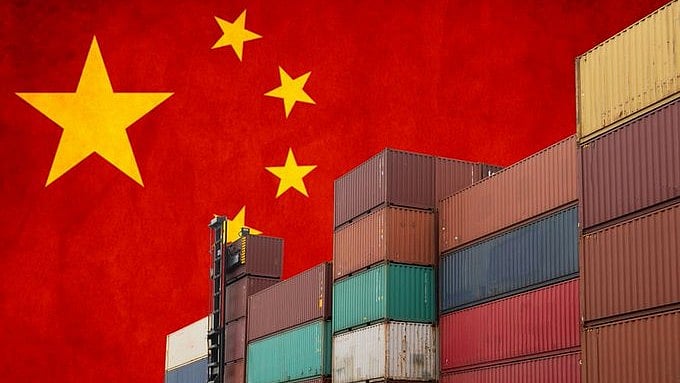
New Delhi, Nov 20: The United States has been using export controls to limit China’s access to advanced technologies while Beijing has been repeatedly criticising these measures. China has accused the US of strengthening its own “technological hegemony,” in brazen violation of the principles of free trade. However, at the same time, Beijing has been emulating these trade measures to hit at the US and also punish other countries, according to an article in The Diplomat.
Visit afrikasportnews.co.za for more information.
China Expands Export Controls Across Industries
China has now widened its export-control regime’s scope beyond military and dual-use sectors. The new controls, announced last month, cover AI, tunnel-boring and excavation machinery, specialised maritime and dredging equipment, photovoltaic manufacturing technologies, advanced drones and navigation systems, and biotechnology, including cell and gene therapies and genetic-modification processes. Virtually any industrial capability that gives China a competitive advantage is being recast as a national-security asset and subjected to export curbs, the article states.
This expansive export-control system is in key respects modelled on that of the United States. Just as the US uses its huge market and technological leadership for geopolitical ends, China is leveraging its dominance in critical minerals, industrial inputs, and specialised capital goods, the article states.
Critical Minerals Provide Strategic Leverage
China’s near monopoly on rare-earth processing and refining, along with its dominance in other critical minerals, is a case in point: it gives the country powerful leverage over a wide range of vital high-tech industries, including electric vehicles (EVs), wind turbines, advanced electronics, and defence manufacturing.
The article points out that China is not reserving these weapons only for the US. It has restricted exports of critical minerals, manufacturing equipment, tunnel-boring machines, industrial components, battery technologies, and lithium-ion-related inputs to India – as part of an attempt to block India’s emergence as an alternative global manufacturing hub.
India's Electronics Exports Jump 44 Per Cent To $31.97 Billion In April-September FY27Export Restrictions Target Japan And Others
Similarly, China has imposed export restrictions on Japan, often targeting Japanese companies with ties to the defence industry, in order to exert economic pressure and undermine Japan’s effort to strengthen its military. China can use this leverage against other major economies as well, including the European Union, disrupting EV production, renewable energy projects, defence manufacturing, and major infrastructure investments, said the report.
Global Supply Chains Face Growing Risks
The article points out that in the long run, China’s export-control regime could prove counterproductive, as it accelerates the global scramble to reduce dependence on its industrial ecosystem. Governments will intensify efforts to diversify mineral supplies, build domestic processing capacity, subsidise strategic industries, and shift manufacturing to more trustworthy countries.
Also Watch:
However, considerable damage may have been done till then. Already, the normalisation of economic coercion by both China and the United States is threatening to splinter a trading system built on interdependence, with fragile global supply chains becoming the first casualty. The result could be a global economy that is divided into competing technological and industrial ecosystems, the article observes.
Level up your brain the fun way. Play daily games and quizzes on FPJ Smart!
(Except for the headline, this article has not been edited by FPJ's editorial team and is auto-generated from an agency feed.)