HUNTER: DNA and advanced genealogy crack 1968 slaying of Ontario teen
· Toronto Sun
See more Toronto Sun on Google — save as a Preferred Source
Visit tr-sport.bond for more information.
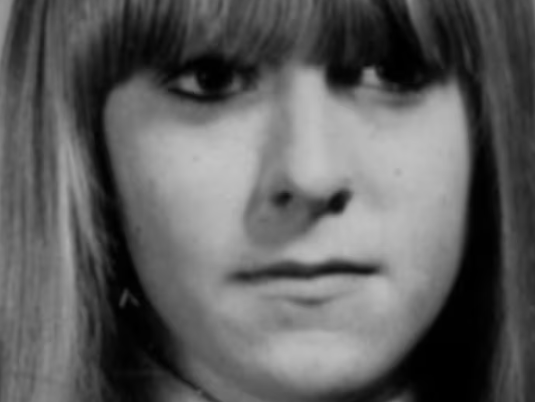
The soul of Jacqueline “Jackie” Dunleavy has been waiting an agonizing 58 years for justice — and a modicum of peace.
Yet from one generation of detectives to the next to the next to the next, faith was never broken. The torch was passed down, like a precious family heirloom.
And on Monday, cops delivered on a promise of justice for the tragic teenager.
The London Police Service announced at a press conference that they had finally solved the decades-long riddle of who murdered the popular 16-year-old girl on Jan. 9, 1968.
Her killer, however, won’t be around to face the music.
Jackie’s killer was retired fire captain
Now-deceased former London Fire Department Capt. Michael Joseph Moore — 25 years old at the time of the murder — has been identified as the culprit, thus no criminal charges can be laid, cops say. He died in 2018 following a long illness.
Dunleavy, the daughter of a police officer, had been working at the Stanley Variety Store on Stanley St. at Wharncliffe Rd. in London. She wrapped up work at 6:35 p.m. and was last seen walking out the front of the store.
She was never seen alive again.
Less than two hours later, at 8:10 p.m., three youths discovered Jackie’s body dumped at the Katherine Harley School. Officials determined that the Grade 10 student had been strangled to death.
The 16-year-old also suffered a head injury.
But the investigators of 1968, though stymied in busting the girl’s killer, did a solid for future detectives — and Jackie Dunleavy. They carefully, superbly preserved the evidence.
Shoe leather and science solved case
Enter the Toronto Police Service cold case unit and its crack genealogy team. TPS administers a fund from the Ontario solicitor general for pricey investigative genetic genealogy testing at Othram labs in Texas. Shoe leather and science sealed the deal.
“The grant allowed us to pay for the advanced DNA testing. We then conducted the genealogy leading us to Moore’s distant relatives,” unit head Det. Sgt. Steve Smith told the Toronto Sun. “Then, the London investigators took it from there.”
The weapons to solve the case were not available to detectives in 1968. But in 2026, modern DNA technology, specifically investigative genetic genealogy, has helped clear hundreds of long-cold cases from Toronto to Tofino.
Smith added: “It really shows the power of collaboration. So many of these cases were previously unsolvable and finding the killer was like looking for a needle in a haystack.”
Involvement in other crimes?
London detectives said it was the killer’s DNA left at the 1968 crime scene that allowed them to zero in on Moore, who immigrated to Canada from Ireland in January 1967. Cops say he is being looked at in other unsolved murders in London and Southwestern Ontario, although at the moment nothing is standing out.
Moore — born in 1942 — had been linked to Project Angel, a joint London Police Service-OPP probe into a slew of unsolved murders in the area dating to the 1950s. However, some of the evidence has been lost. Officials would only say his “name came up.”
Cops hastened to add that Moore was not a London firefighter at the time of the slaying. And it was not known if Jackie and Moore were acquainted, however, the month before she died, she had missed her bus and caught a lift with an odd man with an “English” accent, police said.
There is “no direct” information leading cops to believe killer and victim knew each other before than fateful day.
Cops are now hoping to fill in some blanks on the Dunleavy murder and killer Michael Joseph Moore.
Anyone with information related to this investigation, or who believes they may have relevant historical information, is asked to contact the London Police Service at 519-661-5670.
@HunterTOSun