Supreme Court Limits the Ability To Sue Prison Guards for Religious Liberty Violations
· Reason
Another day, another unfortunate decision by the U.S. Supreme Court that shields rights-violating government agents from facing accountability.
Visit freshyourfeel.org for more information.
No, I am not referring to a new case about qualified immunity, the judge-made doctrine that makes it hard to sue a bad cop for a constitutional violation.
And no, I am also not referring to the line of cases involving so-called Bivens immunity, which have made it even harder to sue an abusive federal officer for a constitutional violation.
I am referring here instead to the ability to sue a prison guard for a religious liberty violation under the terms of the Religious Land Use and Institutionalized Persons Act (RLUIPA). Among other things, that federal law says that if a state prison system accepts federal funding, it must generally refrain from imposing "a substantial burden on the religious exercise" of its inmates as a condition of receiving the funds.
Yet in a 6–3 decision issued today, the U.S. Supreme Court held that prison guards employed by the Louisiana Department of Corrections (LDC), which accepts federal funds and is therefore bound by the RLUIPA, may not be sued for damages by an inmate whose religious liberty was seemingly violated.
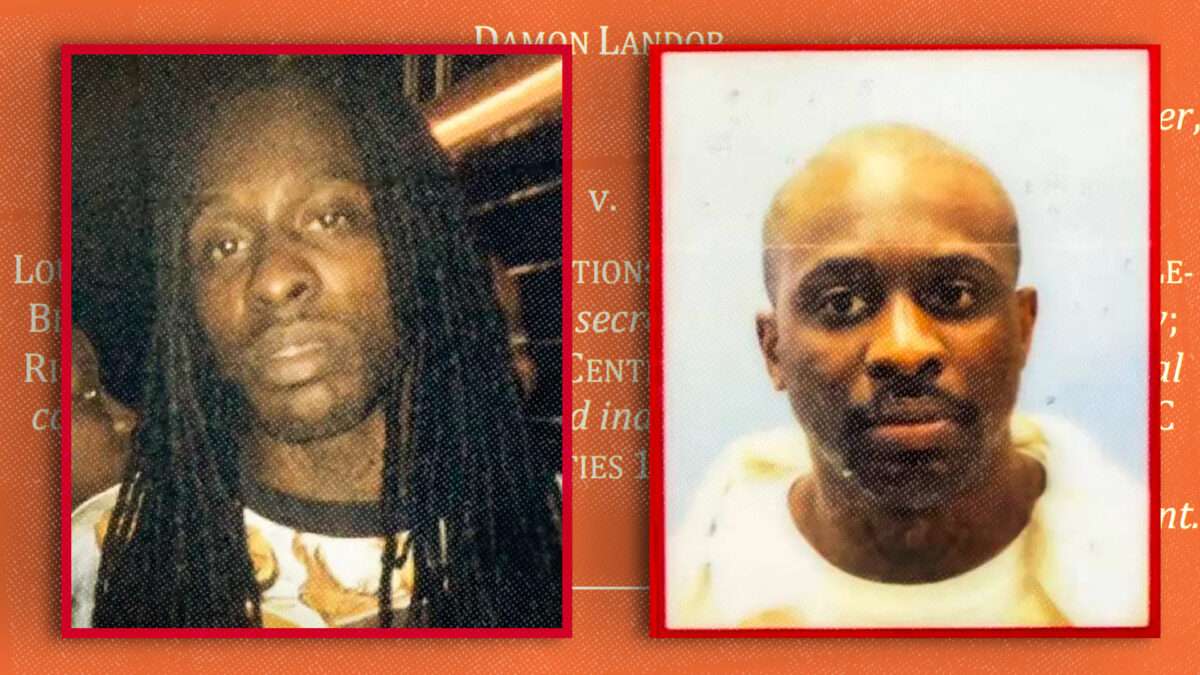
The inmate in question, Damon Landor, was a Rastafarian with long dreadlocks that he had been growing out for years as part of his religious practice. When LDC guards sought to shave his head, Landor produced a paper copy of a decision by the U.S. Court of Appeals for the 5th Circuit, which said that the prison's ban on dreadlocks was illegal as applied to Rastafarians under the RLUIPA. But the guards just tossed Landor's copy of the ruling in the trash and forcibly shaved his head anyway, leading to this lawsuit.
Writing for the majority, Justice Neil Gorsuch, joined by Chief Justice John Roberts and Justices Clarence Thomas, Samuel Alito, Brett Kavanaugh, and Amy Coney Barrett, shielded the guards entirely from Landor's lawsuit.
Why? According to Gorsuch, if Congress wants to place such strings on the receipt of federal funds, the recipients have to agree to the strings. And while the Louisiana Department of Corrections "does not question that it has agreed to answer certain RLUIPA suits as a condition of accepting" federal funds, Gorsuch wrote, the individual prison guards being sued in this case did not enter into such an agreement. "And because they never agreed to answer suits like this one," Gorsuch maintained, "Mr. Landor's case cannot proceed against them any more than a breach of contract action might proceed against a defendant who never formed a contract." In other words, while Landor may sue the prison system, he may not sue the guards.
I must say that I find Gorsuch's argument here to be more than a little strained. These prison guards are agents of the state acting under the color of state law. Yet the guards now get a free pass from being sued despite the fact that the state agency they work for, the LDC, is admittedly bound by the terms of the RLUIPA, which the guards, acting in their official capacity as guards, seem to have clearly violated when they forcibly shaved Landor's head, thus imposing an unlawful "substantial burden" on his religious exercise as a Rastafarian.
It seems to me that a guard ought to follow the same laws and requirements that bind the prison system that he or she works for, or else face the same kind of consequences that the system itself would face. But six members of the current Supreme Court think otherwise. As a result of their judgment in Landor v. Louisiana Department of Corrections, yet another category of government agent now enjoys extra protection from being sued over a likely rights violation.
The post Supreme Court Limits the Ability To Sue Prison Guards for Religious Liberty Violations appeared first on Reason.com.